Hello – message from Jenny Ridgwell – For Food Teachers: my NEA1 Food Investigations 10 Tasks is available again 30th August 2024 as a PDF download – this includes the tasks from the posts below and more. Investigations were researched and written using The Nutrition Program some years ago.
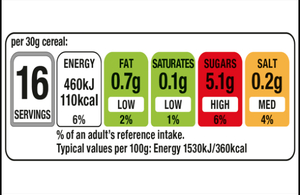
A voluntary UK front of pack Nutrition Labelling Scheme from 19/6/2013 uses Reference Intake information RI – this was known as Guideline Daily Amount GDA
It shows levels of energy, fat, saturates, sugar and salt in red, amber or green if the traffic light system is used.
RIs for fat, saturates, sugars and salt are the maximum amounts that should be consumed in a day. These figures are based on an average sized woman, doing an average amount of physical activity.
The RIs are defined in a new piece of legislation called the Food Information to Consumers Regulation.
The Regulation provides RIs for use on a label for Energy kJ, kcal, fat, saturates, (total) sugars, and salt and these are the same as the current ‘adult’ GDA values, with the exception of protein which has changed from 45g to 50g and carbohydrate which has changed from 230g to 260g.
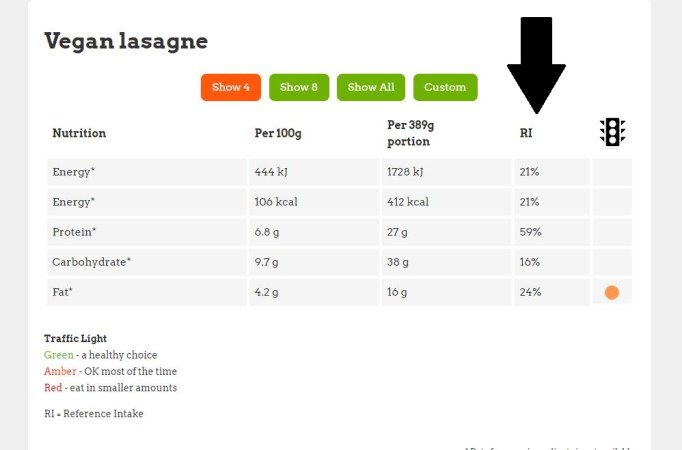
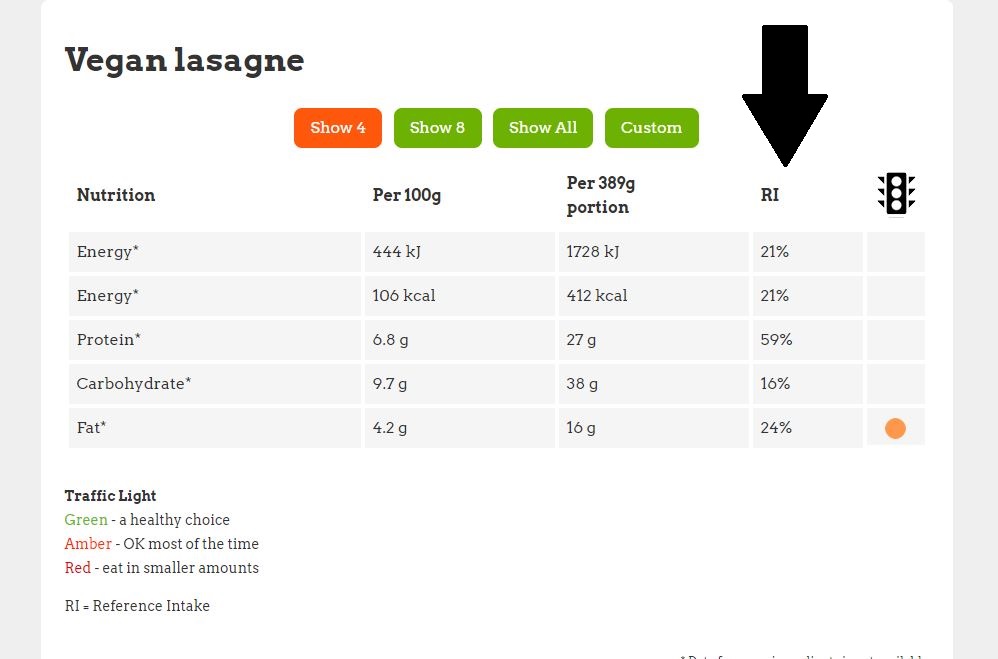
The Nutrition Program shows the Reference Intake on a recipe as a %.
Put your recipe in My Recipes and go to Nutrition and see the chart.
This is a recipe for Vegan lasagne and you can see that it supplies plenty of protein – 59%
Made from aubergine and soya mince with oat milk for the bechamel sauce
In this Vegan lasagne I use vegan ingredients to replace meat lasagne recipe
Soya mince replaces meat mince
Plant based drinks like oat, soya, almond replace milk
Vegan spread replaces butter
Things to watch for
Make sure the lasagne sheets are not made from egg otherwise they are not vegan. There are plenty of plant based drinks to replace milk – this recipe uses unsweetened soya drink. The meat free sauce needs careful flavouring – herbs, tomatoes, vegetarian seasoning, salt and pepper. Taste after it has cooked.
Use Nutrition Program to look at nutrition
Serves 4 The recipe is made for 4 as it is hard to scale it down to serve 2.
Ingredients
180g meat free mince (Sainsburys) made from soya 100ml water 1 tbs vegetable oil Small aubergine 150g cut into slices then cubes 1 small onion 90g, peeled and finely diced 2 cloves garlic, crushed ½ of a 400g can of tomatoes (200g + juice) 1 tbs tomato ketchup Large pinch mixed, dried herbs Vegan stock cube or 1 tsp vegan bouillon powder Salt and pepper Vegan white sauce 2 tbs vegetable oil 40g plain flour 400ml plant based drink – soya, oat, almond Salt, pepper, grated nutmeg
4-6 sheets dried egg free lasagne 60 – 90g
Method
Mix the meat free mince with water and stir so it absorbs and swells.
Gently fry the aubergine cubes, onion and garlic in oil in a large frying pan for 3-4 minutes until they soften, stirring all the time.
Add the softened mince and stir in the tomatoes, tomato ketchup and a little water to make the sauce.
Season with vegan bouillon and mixed herbs. Cook gently for 5 minutes.
Make the white sauce. Heat the oil and flour in a pan for a minute to mix together then gently whisk in the plant-based drink until the sauce thickens.
Season with salt, pepper and grated nutmeg.
The lasagne is ready to assemble. Choose a dish that will serve 4.
Put half the meat free mixture in the base of the dish, then layer on half of the sheets of lasagne.
Spread in the remaining meat free mixture and top with the lasagne sheets.
Pour over the white sauce so that it covers the lasagne sheets.
To serve, set the oven to 150°C and bake 20 minute to thoroughly heat through. It should reach 75°C. Test with a food probe.
I’ve made samosas with cucumber chutney – an example from OCR.
Samosa and cucumber chutney evaluation
Comments
Good points about food product
Nice shapes, well cooked, tasty filling
Improvements needed
Some samosas split open and baking was uneven.
Sensory words – descriptors
Easy to hold, spicy, golden, tasty and crisp pastry.
Fill in a chart like the one above.
Then decide on the Sensory Tasting words to use – Descriptors
I’ve chosen – easy to hold, spicy, golden, tasty and crisp pastry.
For the best samosa result that I want, I give each descriptor a mark out of 5.
easy to hold
5/5
spicy
4/5
golden
4/5
tasty
5/5
crisp pastry
5/5
Open the Star Profile in the Nutrition Program to evaluate your results.
Put these marks in the Rating column.
Get 2 or 3 people to taste your samosas and give a mark for each descriptor. Put their name on +Add Taster – the first one is Jenny – that’s me!
My tasters are called Jenny, Ali and Mosha. Enter their marks.
Complete the Evaluations for each Descriptor. Think about the marks the tasters have given.
Export as a jpeg.
You can put this image into your work. The Evaluations on the left show your comments. My samosas need a little more baking and more flavour with some spices.





 The Nutrition Program Blog