Pink pickled turnips are a favourite ingredient in falafel wraps and mezze in the Middle East.
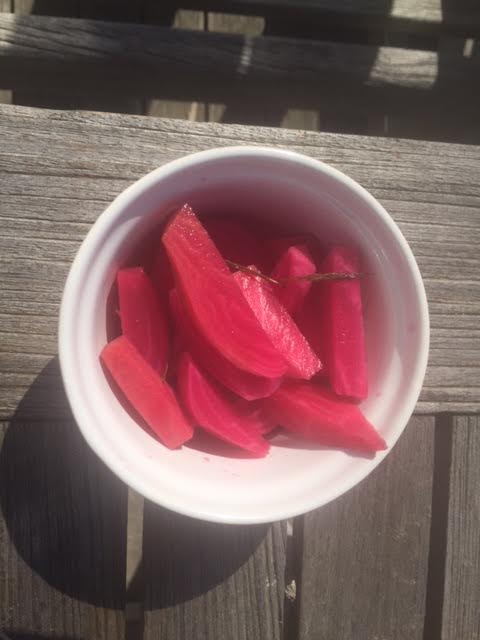
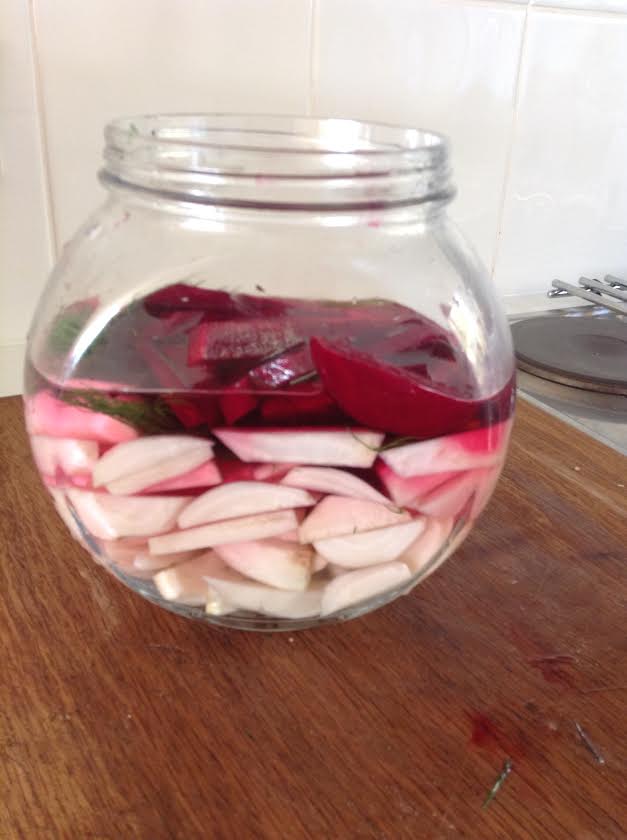
Pink pickled turnips – done!!
The science of making them is amazing – osmosis transfer of the colour from the beetroot to the white turnips.
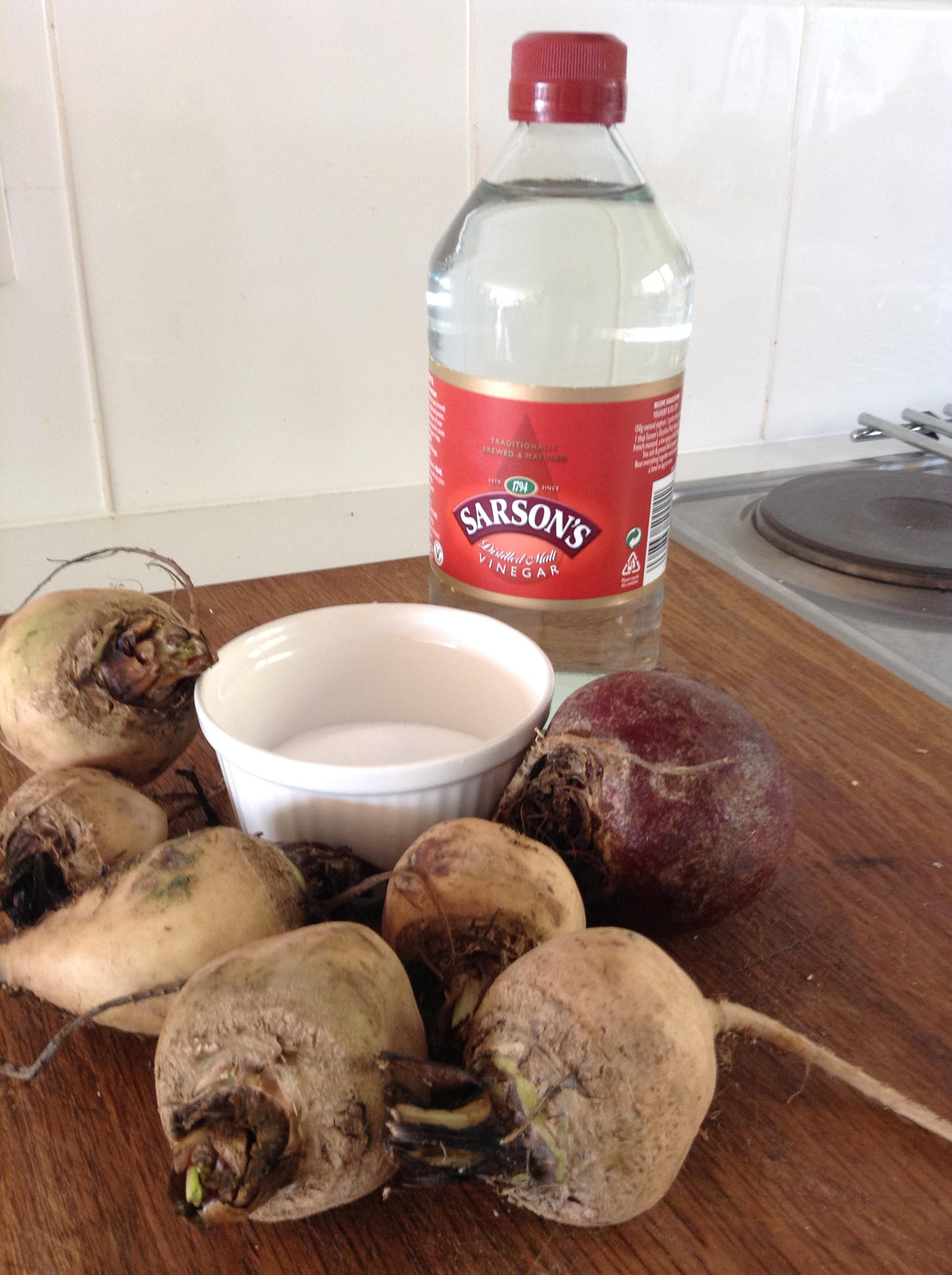
Ingredients
500g small white turnips
1 small red beetroot 25g
25g salt
300ml white distilled vinegar
300ml water
1 teaspoon sugar
1 red chilli
Method
Peel the turnips and the beetroot to remove outside skin.
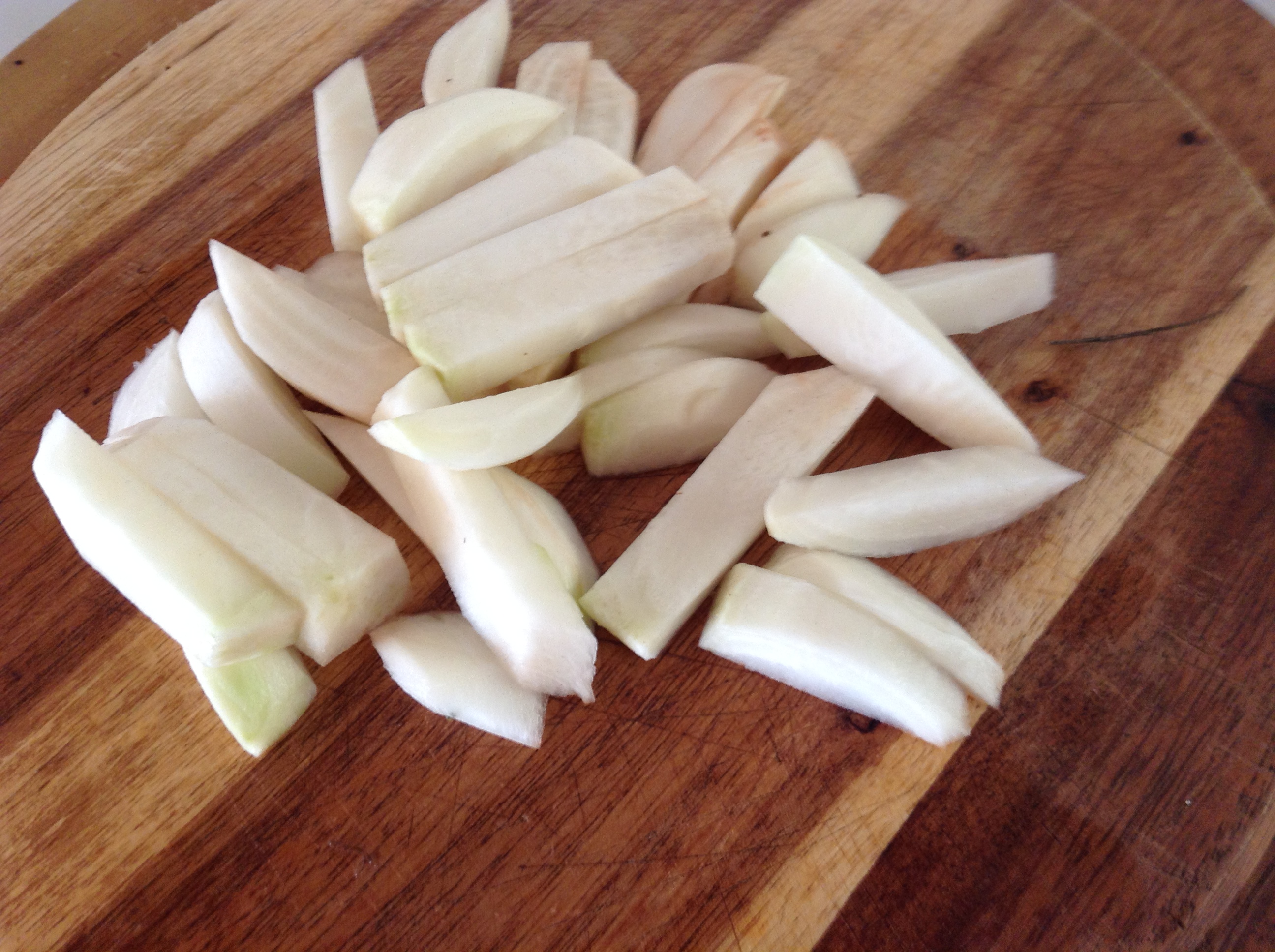
Cut into 1 cm chip sized shapes. Put in a bowl and sprinkle over 1 tablespoon of salt. Leave for 15 minutes so that the turnips soften.
Heat the vinegar, water and sugar in a saucepan
Wash the turnip chips by placing in a sieve and running cold water through them. Dry with paper towel
Place turnip chips into a glass jar and cover with the slices of beetroot.
Pour over the vinegar mixture – you can add chilli for flavour.
Cover and store for a week to allow the turnips have turned pink. Leave for longer and they will turn pinker. They can be stored for up to 6 weeks in the refrigerator.
The pickled turnip strips can be used as dips for hummus or rolled up with falafel in pitta bread with some tahini dip. I like to remove the beetroot strips as they lose their colour in the pickling.
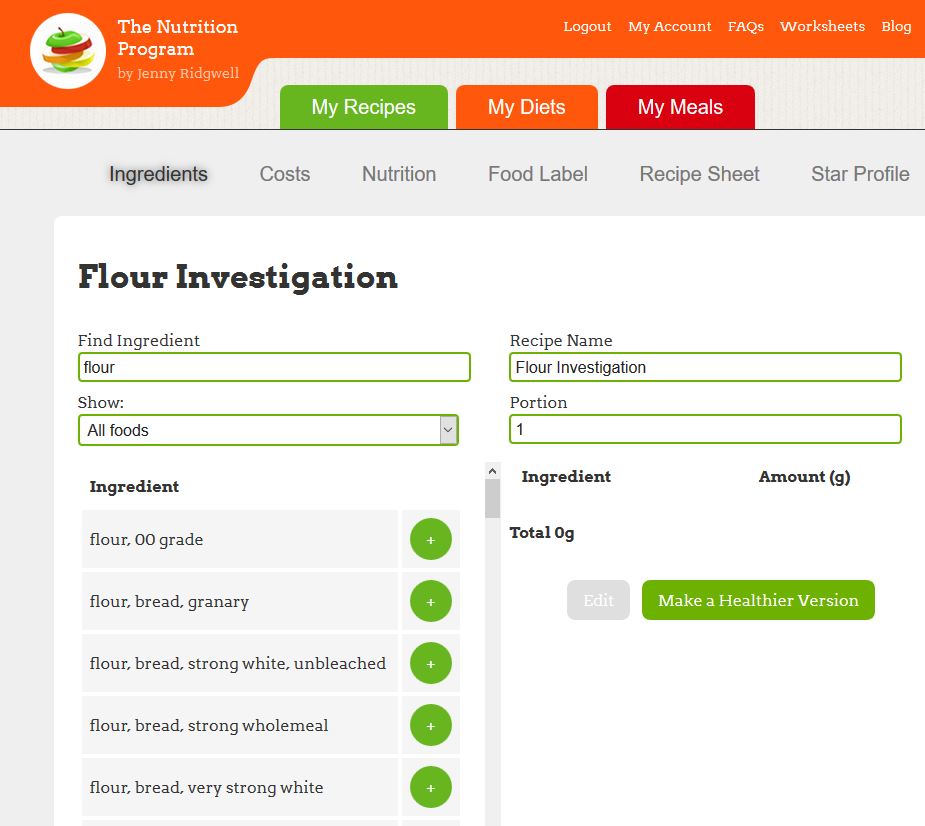
Click My Recipes, +New Recipe and call it Flour Investigation.
Find Ingredient Type flour and a whole list is shown.
Nutrition Program list of flours
If you want to look at what flours to use for bread choose 4-5 types
For example
flour 00 grade;
flour, bread, strong white;
flour, plain; flour,
self raising, white;
flour, gluten free.
Choose them each in turn – the screen shows the Macronutrients for 100 g.
Nutrition Flour 00 grade
To get nutrition for the next flour, Cancel and go back to Find Ingredient.
Collect screen images and put the results of protein in 100g on a table like the one below.
Nutrition strong white bread flour
Flour
Protein in 100g
Flour 00 grade
11g
Flour strong white bread
13g
Flour, plain
9.7g
Flour, self raising, white
8.9g
Flour, gluten free bread flour, Doves farm
4.8g
For NEA 1 research, compare the protein content – my results show that Strong, white bread flour has the most protein and so the most gluten which forms the structure of the loaf.
The cost of a recipe is worked out for a portion and the whole recipe. You can work out costs by hand, on a spreadsheet or using a computer program.
Cost of ingredients depends on
Where you shop – supermarket, local market.
How you shop – special offers, buy in bulk.
The quality of your ingredients – organic food costs more.
If you buy seasonally, or grow your own.
Terms from AQA Food and Nutrition GCSE requirements
To calculate the cost of the dish and compare with a commercial product.
Differentiated worksheets and home learning resources to calculate costs of spaghetti bolognaise or chilli.
Costings worksheet.
Work out the cost of ingredients to make chosen dish and compare to ready-meal tested.
Consider suitable recipe ideas, sourcing of ingredients to promote environmental and ethical awareness, nutritional profiles of recipes, costs, cooking and serving times.
Produce a recipe card of each of the dishes made listing the ingredients, method of making, nutritional profile, allergy advice, costing and special dietary, health or environmental claims.
Costing analysis worksheet.
Costings for each dish, analysed and explained
NEA 2 Section E Final dishes are costed with the results of this costing analysed and explained
OCR statement NEA 2
Excellent consideration and understanding of the task including sensory and nutritional choice, cost, food provenance and seasonality
Task 1: Food investigation (30 marks) to find students’ understanding of the working characteristics, functional and chemical properties of ingredients.
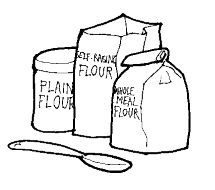
Flours you can use for bread – strong white bread flour, wholemeal bread flour, Unbleached bread flour, very strong white flour, seed and grain flour..
Wheat is rich in gluten, a protein that gives dough its elasticity and strength. When yeast and flour are mixed with liquid and then kneaded or beaten,gluten forms and stretches to create a network that traps the carbon dioxide bubbles produced by the yeast. This gives the bread its texture.
Strong bread flour gives the best results in bread making as it is high in gluten.
Breads made with whole wheat grains and whole wheat flour have a rich flavor as well as a coarse texture and dark brown colour.
Wholemeal flour is made from the whole wheat grain with nothing added or taken away. It will produce a bread which is more dense than a white loaf.
You can mix wholemeal flour with white flour to give a lighter loaf.
Flour with added grains or seeds can add texture to the bread and will often give the bread a lovely nutty flavour.
White flour usually contains around 75% of the wheat grain. Most of the bran and wheatgerm have been removed during the milling process. produces a lighter loaf than wholemeal flour.
Wheatgerm – This can be white or brown flour with at least 10% added wheatgerm.
Stoneground is wholemeal flour ground in a traditional way between two stones.
NEA – Compare the flours used in bread making.
What results do you want?
A light, spongy loaf
A good crust
Good flavour
Stretchy dough – high in gluten
Well risen dough
For the investigation I am going to use – Strong white flour, Strong wholemeal flour, white self raising flour, white plain flour.







 Flours you can use for bread – strong white bread flour, wholemeal bread flour, Unbleached bread flour, very strong white flour, seed and grain flour..

 The Nutrition Program Blog