For this investigation I tested lots of flours including Pasta Flour called 00.
First I made some gluten balls by mixing 150g flour with water to make a dough then washing out the starch.
Flours make different sized gluten balls which are then baked.
Next to make the pasta which can be done by mixing the dough – egg is best – then either rolling by hand or using a pasta machine. Make up 3-4 pastas with different flour and taste test them to compare results. I cut the pasta into 1 cm noodles and boiled for 2 minutes. Same test for each – fair testing.
Liquid egg white used for meringue tests to discover what ingredients can be added
I’ve been doing more egg experiments this time with egg whites.
Have been using Liquid Egg white to save wasting so many eggs as there have been lots of tests to do.
The advantage of using Liquid Egg is that I can measure the egg white to use to experiment. My egg whites from eggs measured different amounts in millilitres so I had to beat some together then measure the same amount for experiments.
Use my book Food Science You Can Eat for more help
Love Food Love Science have an excellent website showing egg white foam experiments and the science behind egg white foam formation.
They are gluten in bread, gluten in pasta and egg white foams and meringues.
Here are some classroom challenges that I found!
Washing gluten out of a flour dough takes ages and it is easy to wash bits down the sink by mistake. My tip – use 150g flour for the dough so you have enough dough to work with and wrap it in muslin.
Make small loaves of bread so that they can be kneaded, proved and baked in a short time – the problem is to make the loaves all at the same time in the same way – I couldn’t do it.
I don’t know how to test gluten in pasta – I made it by rolling out by hand and then by machine which was very fiddly. Then cut it into 1 cm noodles and cooked it for 2 minutes. But how can you test and compare the pasta flours? I’ve put this in my Evaluation of the Task.
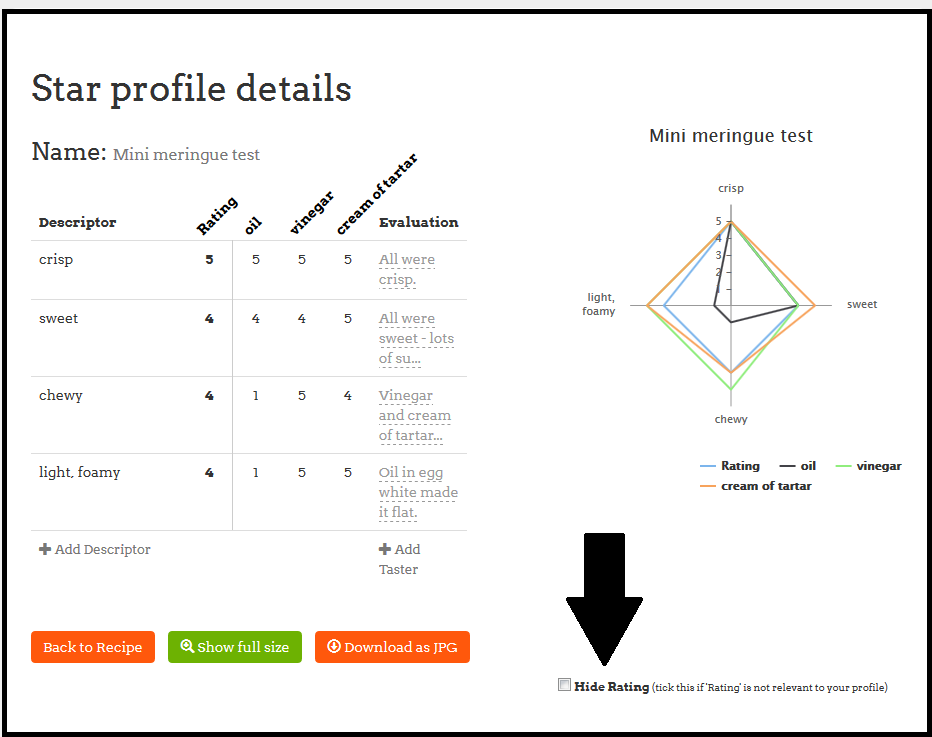
Egg white foams are very difficult to measure so I decided not to do this for the Task. I tested different sugars on a basic recipe and cooked a control which had no sugar at all. Then I added other ingredients and got an amazing result with cream of tartar which gave huge volume.
I highly recommend Harold McGee’s Book On Food and Cooking to support all the food science questions I needed answered.
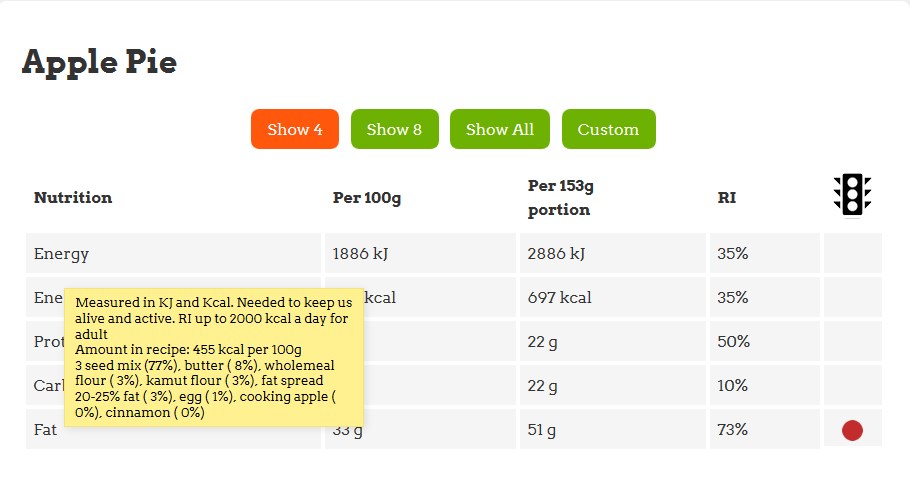
New Rollovers on the Nutrition Program show functions, Reference Intake – RI and DRVs for macronutrients and micronutrients.
Use for Food Preparation and Nutrition GCSE to cover exam requirements for AQA, OCR and Eduqas.
Download our new AQA Curriculum mapping for Food Preparation and Nutrition GCSE to see how you can use the Nutrition Program to teach the specification.








 The Nutrition Program Blog