
For the Food Preparation Task you need to Cost a recipe, use the Method for your practical and analyse and Evaluate your results. Food Preparation book ready soon.
These screens have come from Nutrition Program.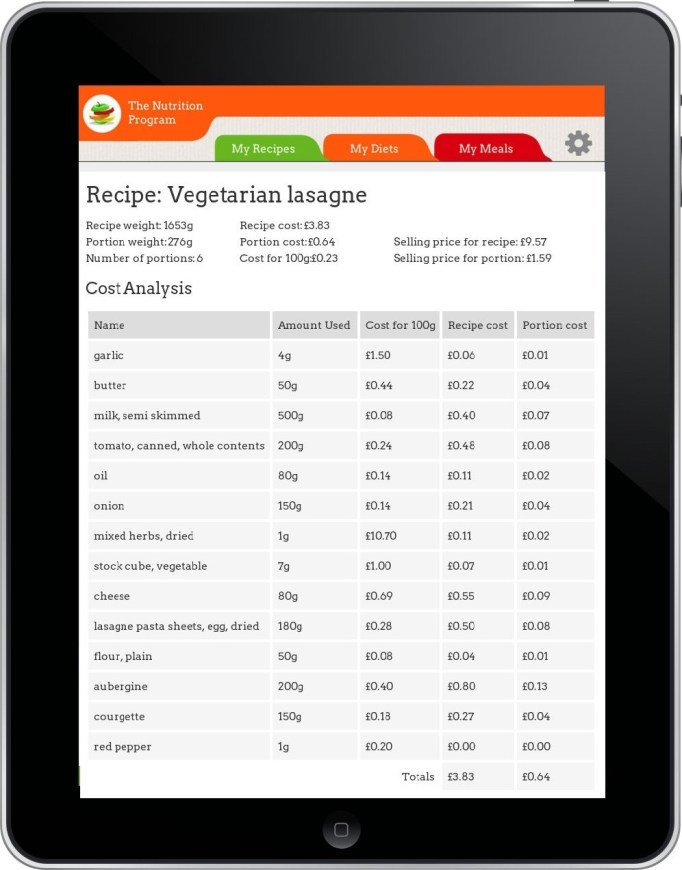


For the Food Preparation Task you need to Cost a recipe, use the Method for your practical and analyse and Evaluate your results. Food Preparation book ready soon.
These screens have come from Nutrition Program.
For this investigation I tested lots of flours including Pasta Flour called 00.
First I made some gluten balls by mixing 150g flour with water to make a dough then washing out the starch.

Flours make different sized gluten balls which are then baked.
Next I made small loaves of bread from each flour making sure I made each loaf in the same way and the same size.
Then I carried out a fair test to compare the breads and make my evaluations.
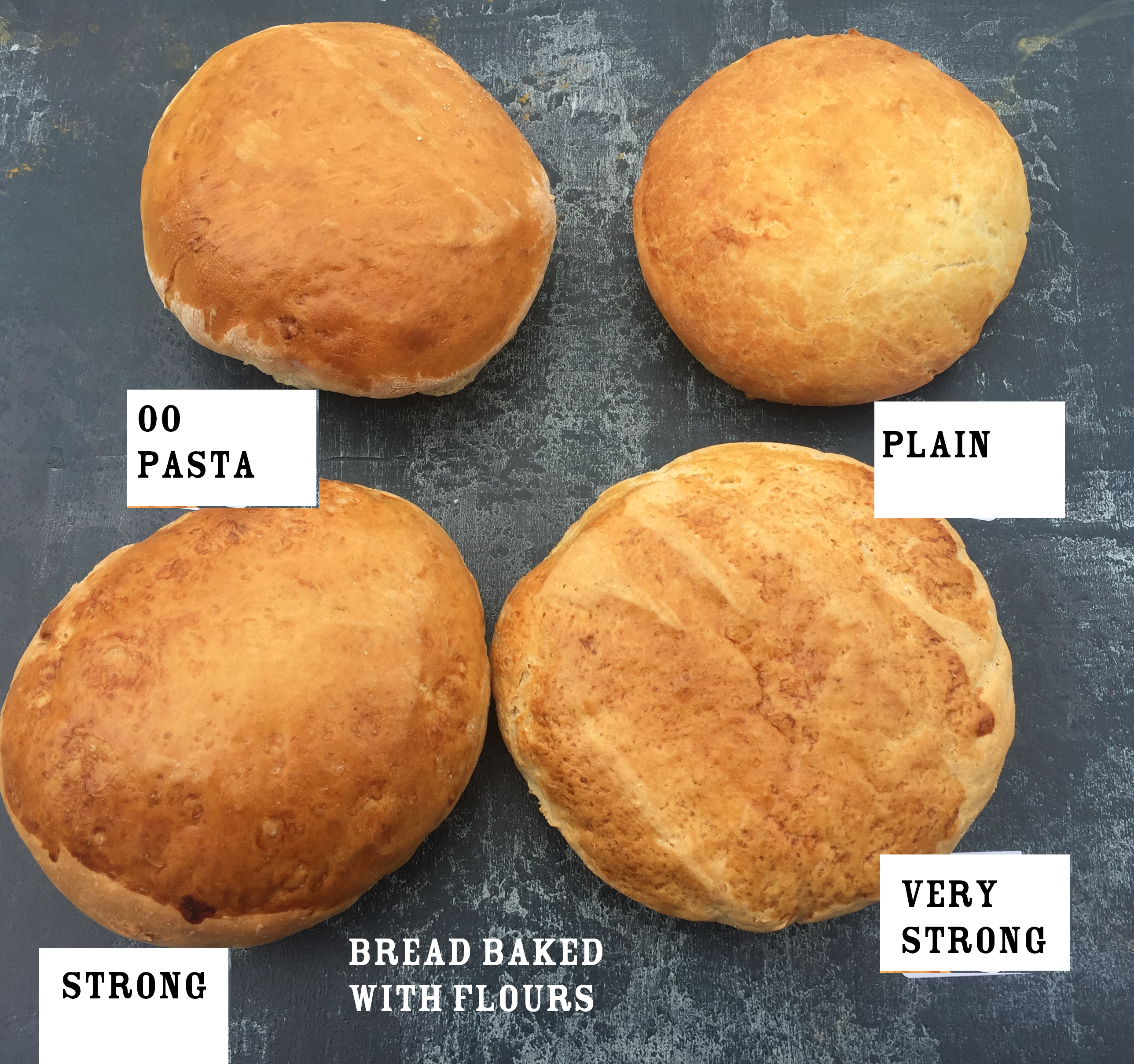
Flours used for bread making
I used The Nutrition Program to present the results of the tasting. This is how it is done.
Click My Recipes and name one as Gluten Bread Test.
Put in the basic bread recipe in Ingredients.
Go to Star Profile.

Star profile for gluten testing
For each Taster put in the name of the flours – Strong, V strong, Pasta 00, Plain
Then think of Descriptors for sensory appraisal – your tasting work.
I’ve chosen firm dough, light texture, firm crust, well risen.
Then tasted the breads and given each a mark out of 5 where 0= not and 5= very.
This is a new function added for NEA 1 test – Click Hide Rating.
I can now see the Star Profile with each bread tasted.
Then I can write my Evaluations.
Then Download as JPG.
Full marks I hope!!


Star profile gluten in bread with Evaluations – full marks!!
For this investigation I tested lots of flours including Pasta Flour called 00.
First I made some gluten balls by mixing 150g flour with water to make a dough then washing out the starch.
Flours make different sized gluten balls which are then baked.
Next to make the pasta which can be done by mixing the dough – egg is best – then either rolling by hand or using a pasta machine. Make up 3-4 pastas with different flour and taste test them to compare results. I cut the pasta into 1 cm noodles and boiled for 2 minutes. Same test for each – fair testing.

baked gluten balls

Flours for gluten test

NEA 1 pastas
Flours make different sized gluten balls

It’s all in NEA1 Book


I’ve been doing more egg experiments this time with egg whites.
Have been using Liquid Egg white to save wasting so many eggs as there have been lots of tests to do.
The advantage of using Liquid Egg is that I can measure the egg white to use to experiment. My egg whites from eggs measured different amounts in millilitres so I had to beat some together then measure the same amount for experiments.
Use my book Food Science You Can Eat for more help

Love Food Love Science have an excellent website showing egg white foam experiments and the science behind egg white foam formation.
Protein foam formation shows how additives affect the stability of egg white foams.
The age of an egg affects its foaming ability and you can see the IFST.org tests here.

What whisk to use? I found that electric whisks were best to get a fair test for experiments as you can time the whisking time and level of whisking.
You can find the tests for gluten and bread, gluten and pasta and egg whites in our resource Food Investigations NEA 1 available August 2024


I used The Nutrition Program to present the results of the tasting. This is how it is done.
Click My Recipes and name one as Mini meringue test
Put in the basic meringue recipe in Ingredients.
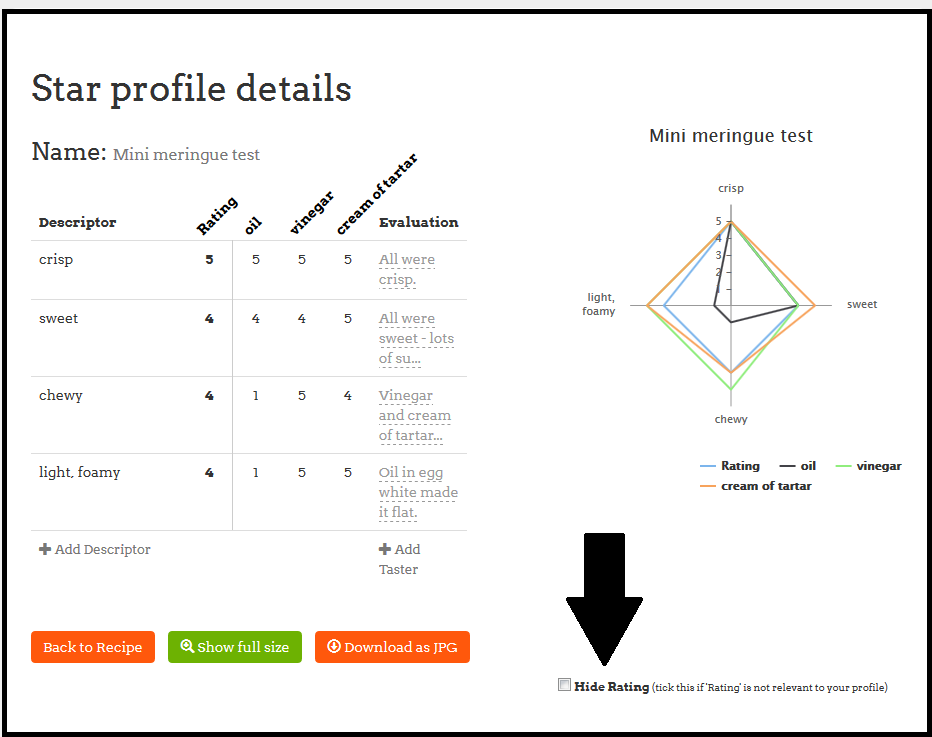
I’m testing to see what happens when I add oil, vinegar and cream of tartar to egg whites.
Go to Star Profile.
For each Taster put in oil, vinegar and cream of tartar.
Then think of Descriptors for sensory appraisal – your tasting work.
I’ve chosen crisp, sweet, chewy, light foamy
Then tasted the meringues and given each a mark out of 5 where 0= not and 5= very.
This is a new function added for NEA 1 test – Click Hide Rating.
I can now see the Star Profile with each meringue tasted.
Then I can write my Evaluations.
Then Download as JPG.
Full marks I hope!!


We’ve trialled and tested 3 more Tasks for NEA 1 for download and Powerpoint.
They are gluten in bread, gluten in pasta and egg white foams and meringues.
Here are some classroom challenges that I found!


 The Nutrition Program Blog