Food Investigation – flour for bread NEA 1


Look at our 2 YouTube videos to give step by step to help carry out a Food Investigation for Bread flour.

Bread flour Food Investigation

Bread flour results as evaluation

Task 1: Food investigation (30 marks) to find students’ understanding of the working characteristics, functional and chemical properties of ingredients.

Flours you can use for bread – strong white bread flour, wholemeal bread flour, Unbleached bread flour, very strong white flour, seed and grain flour..

Wheat is rich in gluten, a protein that gives dough its elasticity and strength. When yeast and flour are mixed with liquid and then kneaded or beaten,gluten forms and stretches to create a network that traps the carbon dioxide bubbles produced by the yeast. This gives the bread its texture.

Strong bread flour gives the best results in bread making as it is high in gluten.

Breads made with whole wheat grains and whole wheat flour have a rich flavor as well as a coarse texture and dark brown colour.

Wholemeal flour is made from the whole wheat grain with nothing added or taken away.  It will produce a bread which is more dense than a white loaf.

You can mix wholemeal flour with white flour to give a lighter loaf.

Flour with added grains or seeds  can add texture to the bread and will often give the bread a lovely nutty flavour.

White flour usually contains around 75% of the wheat grain. Most of the bran and wheatgerm have been removed during the milling process. produces a lighter loaf than wholemeal flour.

Wheatgerm – This can be white or brown flour with at least 10% added wheatgerm.

Stoneground  is wholemeal flour ground in a traditional way between two stones.

NEA – Compare the flours used in bread making.

What results do you want?

  • A light, spongy loaf
  • A good crust
  • Good flavour
  • Stretchy dough – high in gluten
  • Well risen dough

For the investigation I am going to use – Strong white flour, Strong wholemeal flour, white self raising flour, white plain flour.


This shows the star profile using the Nutrition Program 

TRY OUR FOOD QUIZ 2

Star profile gluten in bread with evaluation – you need to annotate results.


Save

Save

Save

Save

Save

Save

Save

Save

Save

Save

NEA1 Food Investigations 10 tasks published 2018
Dahl – it takes skill – Monisha Bharadwaj

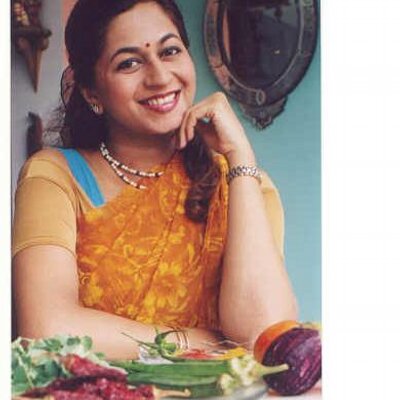
Monisha BharadwajI met Monisha Bharadwaj on a Guild of Food Writer’s Food Trip to Hampshire with Hampshire Fare and it was the perfect time to ask about dahl. I’ve struggled to make dahl that tastes and looks delicious, yet exam boards seem to think is is a low level skill. Wrong! But why not ask the expert?

Monisha is an Indian Chef, TV chef, food writer, author and cookery teacher and she knows a lot about cooking dahl, rice and raita.

Jenny – Do you think dahl is simple dish to make?
Monisha – ‘You’ve got to have a lot of skills to make dahl.  You need to know about sequence, proportion, balance and cooking time. How to cook the lentils properly to get the consistency right – getting the balance of spices and seasoning. There are many kinds of lentils and you need to know which type and colour to choose. Do you soak the lentils beforehand?

How long will you cook them to get the consistency you need – how thick or soupy should it be?

You need to get the spices and seasoning right to get the 6 tastes at the heart of Indian cooking – sweet, sour, salty, hot, bitter and astringent. For hot we use chilli, mustard and ginger. For bitter turmeric and cumin and for astringent turmeric and coriander.

Jenny – So how is dhal made?

Monisha – You need a high temperature frying oil to cook seeds, then onions, ginger and garlic.

Then add tomatoes, spice powder and lentils and cook with water until the lentils are soft. Taste and season with salt. Cook further if the lentils need to be softer.

Serve topped with coriander leaves.

Jenny – ‘When serving with rice – is that easy to cook?’

Monisha – ‘Cooking rice takes skill – knowing what rice to buy, what proportion of water to rice to use, the cooking time, draining and how to get it fluffy.’

Jenny – ‘So how do you cook rice?’

Monisha – ‘I wash the rice, fry spice seeds, add the rice and add 2 times the water by volume. Boil then reduce the heat, cover and cook for 10 minutes. Then leave for 5 minutes to fluff.

Jenny – ‘ Then serve with raita?’

Monisha – ‘Yes you can make it with grated cucumber, salt and pepper and plain yogurt.’

Jenny – ‘So Dahl, boiled rice and raita need high skills all round! Thanks’

Save

Save

Save

Save

Save

Save

Save

Save

Save

Save

Save

Save

Thoughts on Food GCSE 2016 Practical by Jenny Ridgwell

The exam boards are busy finalising their teacher’s support resources for the Food Practical 2018 exam and I think it is fundamentally flawed.

Why? 3 reasons.

A 3 hour practical is too long to make 3 dishes. As a consequence, students are expected to make dishes that are too complicated and irrelevant for today’s cooking in order to fill the exam time.

Exam boards are busy listing dishes according to the ‘level of skill’ – high, medium or low. So students, pushing themselves to do well, will practise dishes that are too complex for modern, multicultural living. Examples given for high skill are lemon meringue pie with piped meringue, cream horns made from home made flaky pastry – a dish high in fat and sugar – and veloute sauce. Daft, too difficult and unnecessary work.

Someone needs to learn to respect the high level skill for making delicious food and serving it well cooked and looking attractive.

Someone needs to acknowledge that we live in a diverse multicultural and teenagers don’t need to cook so many pastry dishes and cakes. I find falafel served with tsaziki, salad and warm pitta bread a really hard dish to make, yet this is a low level skill. Think how hard it is to make a good curry and cook fluffy rice.

Teachers are encouraged to teach how to make pasta – great for fun, and delicious to eat. But what happens if 8 pupils taking the 3 hour exam all want to make pasta with the school’s only pasta machine? Isn’t such a demand putting great financial pressure on food rooms that already struggle balancing the books?

When I started teaching in 1970, my inner London students had to learn how to make shortcrust, rough puff, flaky and choux pastry – all high fat, complex dishes and during hot summer months the results were awful. We made jam puffs, Eccles cakes and cream horns packed with hydrogenated margarine and lard. After a year, I cleared out the antique equipment in my food store room – out went the heavy iron griddle pans, and dozens of cream horn tins and most of the fluted and plain flan rings.

Britain’s food culture was changing – out went the fatty, baked pies and in came spaghetti and rice to make sensible, healthy family meals. When I attended Whipps Cross hospital to give birth to my daughter,  one of my students called Carole, greeted me with ‘Hello Miss.’ I was shocked that I might be in labour next to a teenager, but pleased that I knew she could cook shepherds pie and make some fish cakes.

Please don’t let the new Food GCSE return to the dark ages of Bero Baking and Good Housekeeping’s Cooking is Fun. Our society deserves to learn to cook the massive choice of fresh fruit and vegetables, beans and pulses and celebrate our food diversity. Jenny Ridgwell

See Dahl on blog


Star Profile / Star diagram for Pastry

Here’s how you can use the Nutrition Program for GCSE Food Preparation and Nutrition NEA 1

Assessment 1: The Food Investigation Assessment 15% of total qualification

Task A Example: Shortcrust pastry should be crisp to the bite and crumbly in the mouth. It can be prepared using a range of different ingredients.
Investigate the working characteristics and the functional and chemical properties where appropriate, of the different ingredients needed to achieve a perfect shortcrust pastry.

Choose fats for pastries – for example, Trex, butter, lard and margarine, lard on its own.

Think of 5 words to describe pastry – crumbly, short, buttery, light, tough.

See our Tasting Word Bank.

Make and taste the pastries and put the results on My Recipes, Star Profile.

The Tasting words are listed as descriptors on the left side.

Then carry out several tastings and get marks out of 5.

The Nutrition Program creates the star as you can see below. You can then write the Evaluations of the different pastries as shown below and download your work.

Star profile for pastry

YouTube video using a star profile to evaluate

This is the star profile for sugar in sponge cakes.

Star profile of sugar in cakes with annotation