Maths and Food Technology

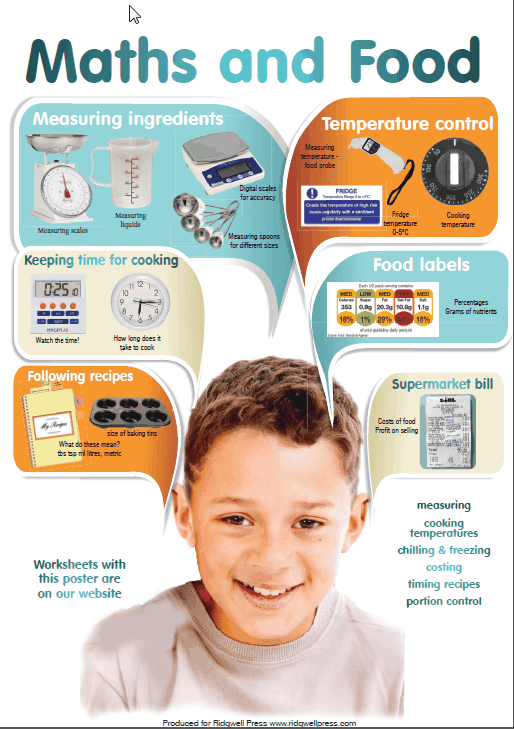
My talk in March 1st 2014 ‘Maths and food teaching’ Teachers are asked to help develop maths skills in every subject and food teaching needs a wide range of maths skills. Using the Nutrition Program we will explore the new food labelling regulations and look at all the maths involved in understanding the nutritional value of recipes, meals and diets.’

Free Maths and Food Technology is on this link.

Maths and Food

This talk on Maths – Powerpoint on this link.

3663 is one of the largest suppliers of wholesale food and catering but do you know why they use these numbers?

Email me the answer – it’s embeded in the talk.

This is how teacher Linda Martin includes Numeracy in her lessons.

‘The majority of my lessons have references to Maths.

I want students to understand the importance of how other subjects can help them in Food Technology

I will use a basic recipe and I will double it, treble it and so on

Swiss Roll

3 eggs , 75g Flour, 75g Caster Sugar

I will ask the class what would the quantities be for 2 egg or 4 eggs

Similarly Shortcrust pastry 25g flour, 12g fat, 5ml water – Scale this up.

With the Nutrition Program look at % of GDA

I will reference Bar Charts, Pie Charts –  I know you have been working in Maths on Pie Charts.

All the scales we use are balance scales and this is particularly helpful for the less able and it is very visual, meets the needs of different learning styles.

We work in Metric but I also have conversion charts.

For the Program I pair students up, although they are working individually I try to have one that is more confident with numeracy and ICT skills and they can usually be a coach for the weaker student. I find they very quickly get the hang of it.

Linda Martin The Community College, Shropshire

Food Science – Chemical Raising agents NEA 1

Raising agents

Four main raising agents are used in cooking:

  1. Air – egg whites, beating creaming, rubbing in
  2. Steam – profiteroles,choux pastry, Yorkshire pudding
  3. Carbon dioxide – yeast fermentation, baking powder, self raising flour
  4. Chemicals – bicarbonate of soda, baking powder

How do chemical raising agents work?

There are 3 main chemical raising agents:

  1. Sodium bicarbonate (bicarbonate of soda, E500 sodium carbonates) is a raising agent used in soda bread and gingerbread. It is an alkali.
  2. Cream of tartar is an acid called potassium hydrogen tartrate and it is mixed with bicarbonate of soda to provide the acid ingredient for baking powder. This ingredient can be added to stabilise whipped egg whites and increase their volume, and is added to whipped cream.
  3. Baking powder is made from the alkali, bicarbonate of soda and the acid, cream of tartar.  As soon as liquid is added to the baking powder or bicarbonate of soda, carbon dioxide gas bubbles are given off which push up the cake, muffin or bread mixture. Baking powder has a drying agent mixed with it to stop it reacting in the packet.

Make your own baking powder:  Mix 1 level teaspoon bicarbonate of soda and 2 level teaspoons cream of tartar.

Self raising flour is made from plain flour and baking powder.

Make your own self raising flour:  Add 1 heaped teaspoon baking powder to 100 g plain flour.

The science bit

Bicarbonate of soda produces more carbon dioxide gas if it is mixed with an acid food – cream of tartar, buttermilk, sour milk. If you don’t mix it with an acid, you get a soapy taste in the food.

Baking powder experiment

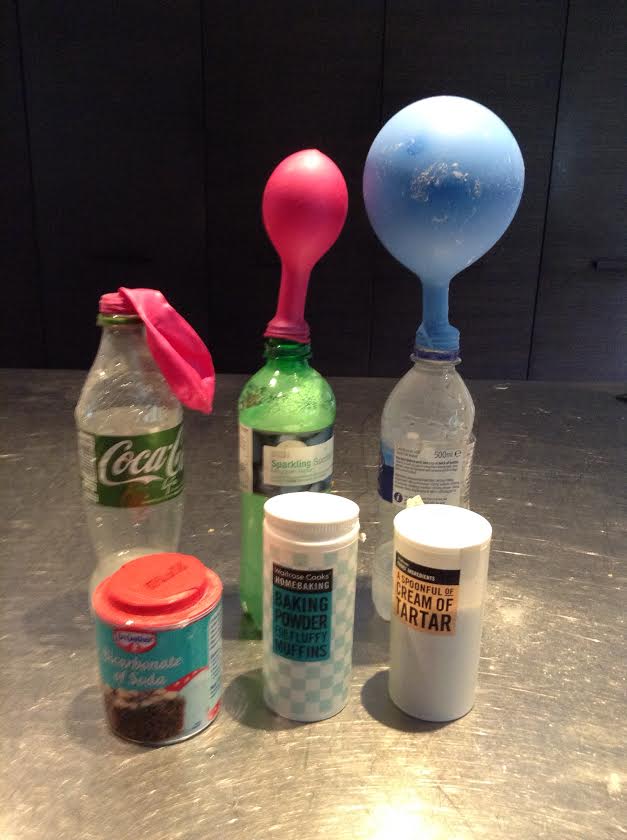
Experiment to blow up balloons.

You need
Bicarbonate of soda
Baking powder
Cream of tartar
3 small DRY 500ml plastic water bottles
3 balloons

Method

  1. Label the bottles 1,2,3.
  2. In 1 put 2 heaped teaspoons of bicarbonate of soda
  3. In 2 put 2 heaped teaspoons of baking powder
  4. In 3 put 2 level teaspoons of cream of tartar and 1 level teaspoon of bicarbonate of soda.
  5. Boil a kettle of water. Mix 300ml boiling water with 200 ml cold water.
  6. Pour 100ml of hot water into 1, quickly put a balloon on top and shake.
  7. Pour 100ml of hot water into 2, quickly put a balloon on top and shake.
  8. Pour 100ml of hot water into 3, quickly put a balloon on top and shake.
  9. Watch what happens. Which balloon is blown up the most?

Which one does not blow up?
Explain why the balloons either blow up or remain empty.

For science experiment, make soda bread or scones

What can I cook?

Irish soda bread
Serves 4
Ingredients
80g self-raising flour
80g plain flour
½ level tsp salt
½ level tsp bicarbonate of soda
100ml buttermilk or 100ml milk mixed with ½ teaspoon cream of tartar or vinegar

soda bread

Method   

  1. Preheat the oven to 200C/Gas 6. Lightly flour a baking sheet.
  2. Put the flours, salt and bicarbonate of soda in a mixing bowl and stir.
  3. Make a dent in the centre of the flour and pour in the buttermilk, or milk mixed with cream of tartar or vinegar. Mix quickly to form a soft dough.
  4. Add less or more milk if the dough is not sticky enough.
  5. Turn the dough onto a floured surface and knead.
  6. Shape into a round and flatten the dough slightly before placing on the baking sheet.

Cut a cross on the top and bake for about 25 – 30 minutes or until the loaf sounds hollow when tapped. Cool on a wire rack.

What can I cook?

Cheese and onion muffins
Makes 6
Ingredients
75g margarine or butter
1 small onion (50g), very finely chopped
1 egg, beaten
150 g grated Cheddar cheese
100 g self raising flour
1 level teaspoon baking powder (2g)
2 tbs milk (30g)

Nutrition per portion
Energy 273 kcal, Protein 9.4g, Sugar 1 g, Fat 20g, Salt 0.9g
Allergens gluten, milk, egg

Method
1. Preheat the oven to 200°C/Gas 6.
2. Melt the margarine or butter and stir in the chopped onion, beaten egg, 120g cheese – reserve the rest for the top.
3. Mix in the flour and baking powder to make a soft dough and add milk to soften the dough.
4. Place equal amounts into 6 muffin cases and bake 20-25 minutes until they are golden brown and spring back to touch.
Equipment
Mixing bowl, muffin tray, teaspoon, measuring jug, chopping board, sharp knife, fork, grater, muffin cases

Presenting results
I used The Nutrition Program to present the results of the tasting. This is how it is done.
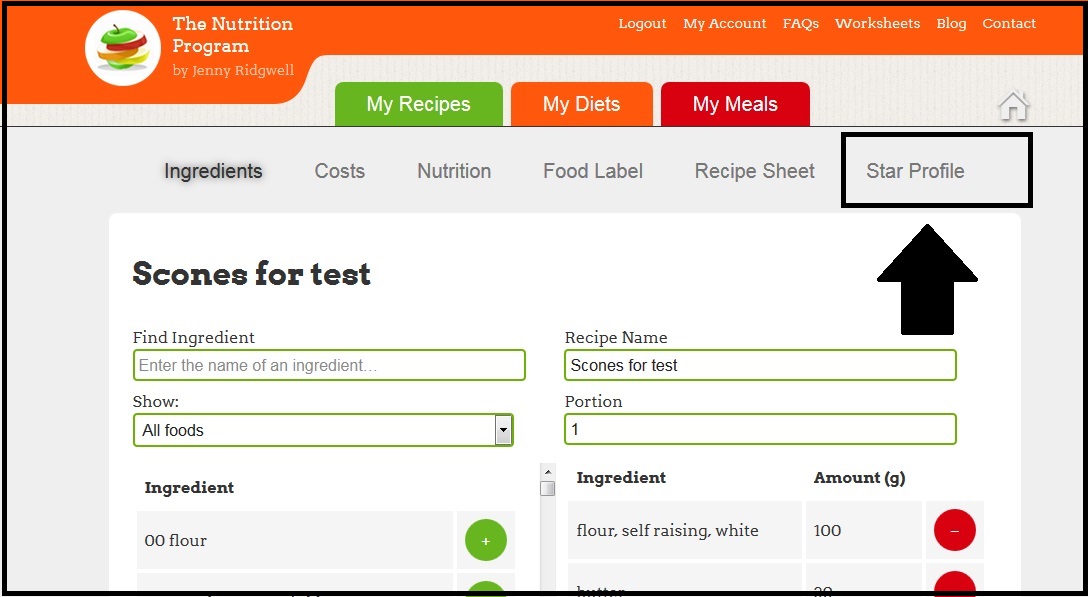
1. Click My Recipes and name one as Scones with different raising agents
2. Put in the scone recipe in Ingredients. You can test out different scone recipes using plain flour, self raising flour, flour with bicarbonate of soda and flour with baking powder.
3. Go to Star Profile.

Star profile for chemical raising agents

For each Taster put in the name of the raising agents – I’ve chosen plain + baking powder, SR + baking powder, plain + bicarb and tartar, SR flour

Think of Descriptors for sensory descriptors. – I’ve chosen light, well risen, crumbly, solid
Taste the scones and give each a mark out of 5 where 0= not and 5= very.
Click Hide Rating.

Star profile for chemical raising agents

See the Star Profile with each scone tasted.

Write Evaluations.

Evaluation of raising agents

Download as JPG.

Full marks I hope!!

NEA 1 Food Investigations 10 Tasks  – links on this blog
Task 1 – Starchy ingredients to thicken sauces and soups  
Task 2  – Chemical raising agents for scones, cakes and biscuits 
Task 3  – Fats used in shortcrust pastry. 
Task 4  – Flours used in pastry – use for gluten tests 
Task 5  – Gluten in flour for breadmaking
Task 6 – Gluten in flour for pasta making
Task 7  – Sponge cakes – changing the flour
Task 8  – Sponge cakes  – changing the sugar
Task 9  – Eggs as setting agents 
Task 10  – Egg foams and meringues

Food Science You Can Eat on this link

NEA1 on this link

Marguerite Patten came to tea

Marguerite Patten

On Tuesday July 20th 2010 Marguerite Patten CBE aged 94, came to tea at my home. In 2007, she received the Woman of the Year, Lifetime Achievement Award, and I think she deserved to be a Dame.

As Marguerite said to the invitation – ‘It sounds like a very happy occasion.’

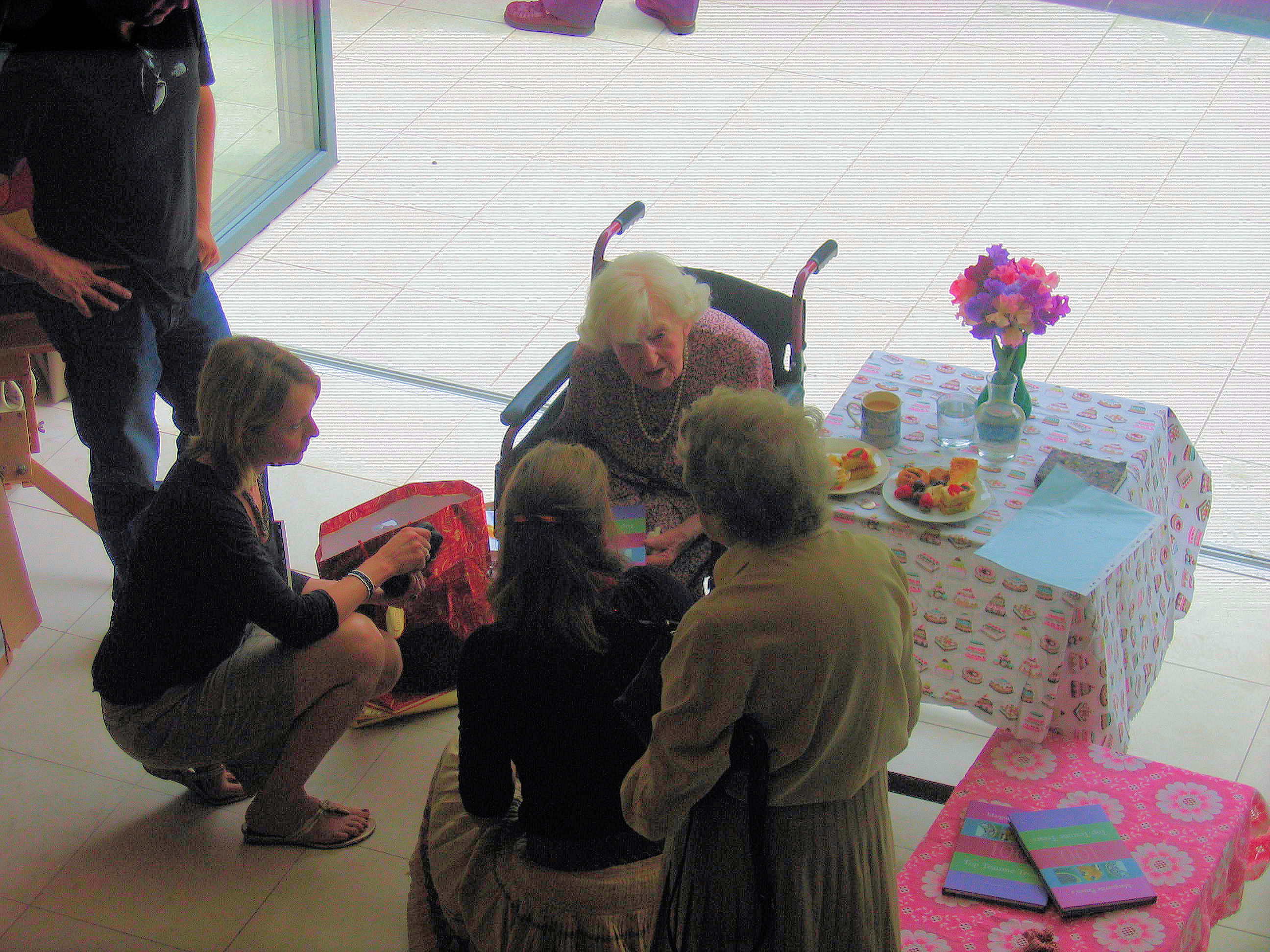
Marguerite Patten talking to groupShe arrived promptly at 1.30 for her 2 o’clock start and set herself up in our house, surrounded by tables laden with the cakes, biscuits and sandwiches that the large audience had brought. Some guests even arrived dressed in wartime costumes – they had  come to worship her as part of our Villa Events. After her fascinating talk – which lasted half an hour as I’d asked, she answered questions and went on long after the 4 o’clock deadline which we’d planned. You can see from the pictures how people arrived with books for her to sign and she brought along copies of her latest books and we raised over £400 in funds for  Martlets Hospice in Hove.

During World War 11 Marguerite worked for the Ministry of Food and gave demonstrations and advice on how to eke out the meagre food rations, and a recent book shows she was an expert on Spam. After the war, Marguerite was at the forefront of food innovations.

Pressure cookers, mixers, refrigerators, margarine… the stories go on. When the microwave cooker was invented, she was out there demonstrating food skills. Her work continued with TV and radio broadcasts and she said she was not a celebrity chef, but a home economist.


teatableMarguerite and teamarguerite4marguerite5


This is part of the letter I wrote to her after the visit:

Dear Marguerite, I was so honoured that you could come and tell us the amazing story of your life and work – it was an inspiration to all that attended. We really did hear from a ‘living legend’ and you recounted the stories of war time Britain and its food with such passion. The message that I came away with was to support local, fresh food and to inspire the younger generation to do the same.

I watched as people came to speak to you and get their books signed. They were so pleased to meet you and some said that it had been their dream, which has now come true.

Best wishes Jenny Ridgwell

Marguerite has always influenced my passion for food.

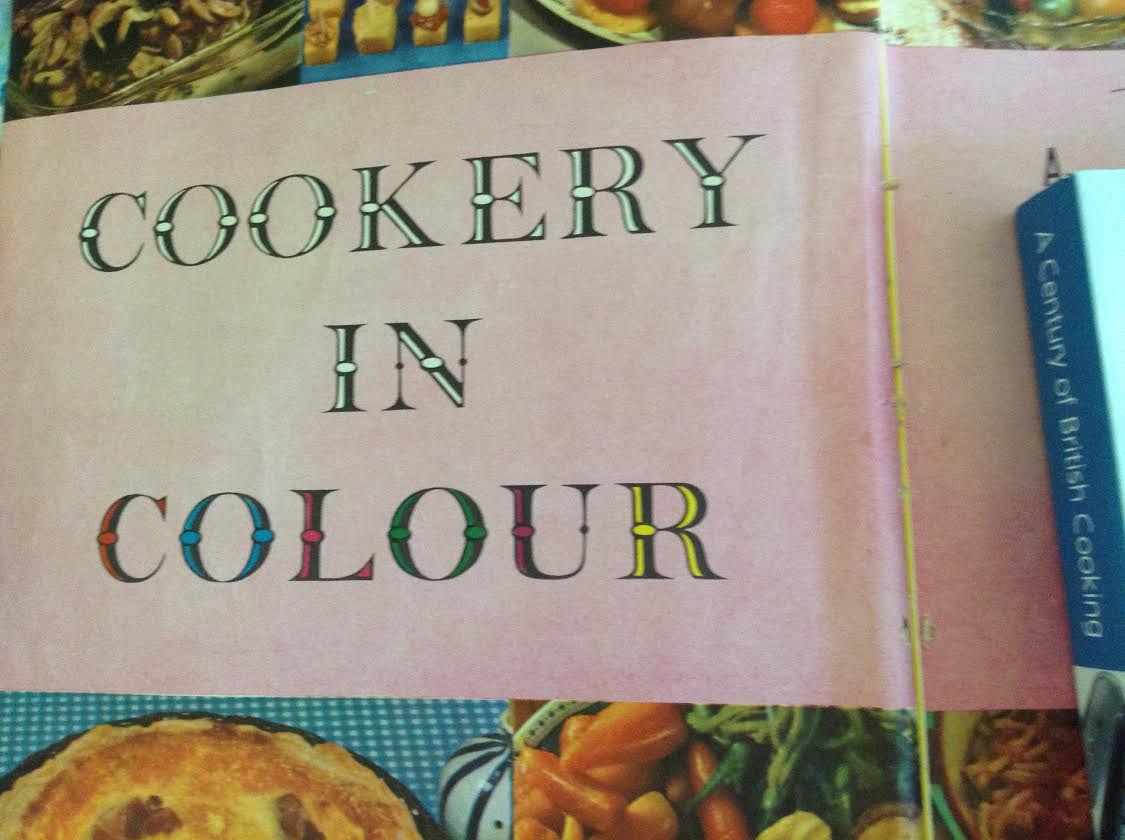
In 1960 at school I was ‘too clever’ to take part in cooking lessons but I was given Cookery in Colour by Marguerite Patten.

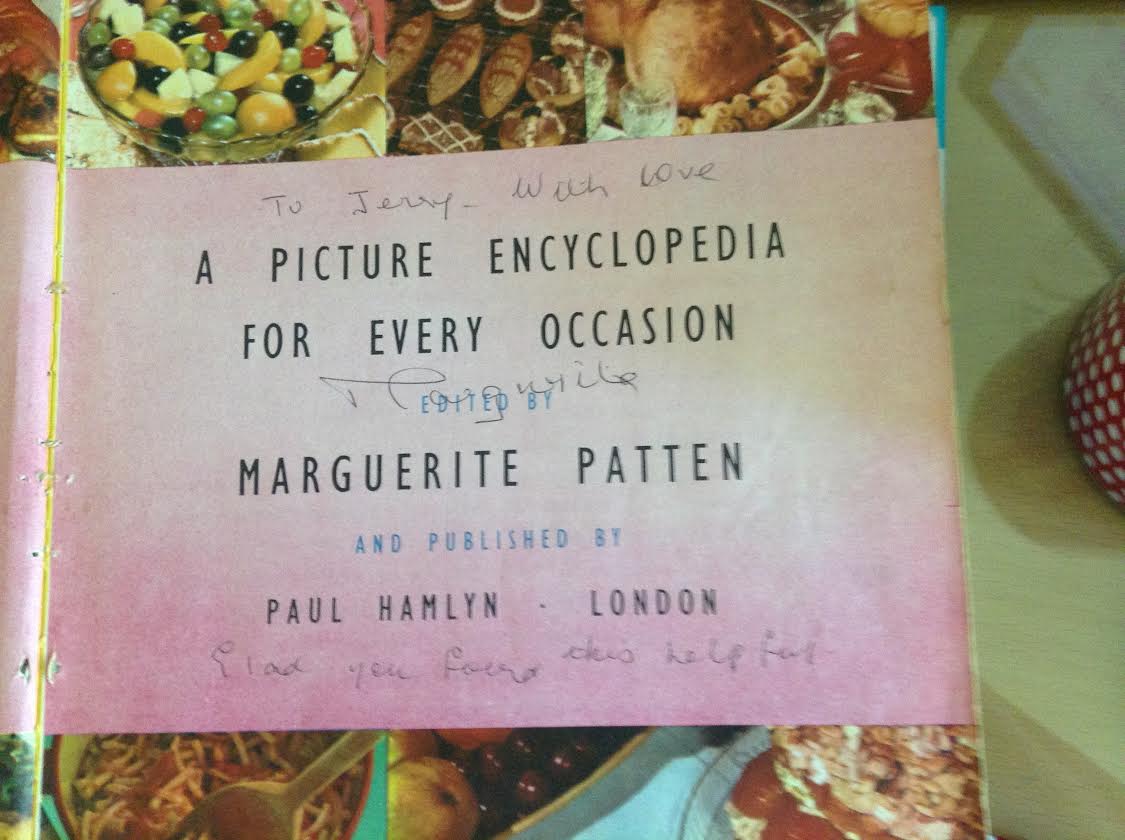
In 2010 I went to her house in Brighton and she signed the battered copy and wrote ‘To Jenny with love – Glad you found this helpful’.

Indeed it was the start of something brilliant – over 40 years for me working with food.

Cookery in Colour

Cookery in colour dedicationI would often meet her at food events and talk about food in the curriculum. She was horrified when Home Economics became Food Technology and was told that students were cutting up bits of paper to show what a pizza looked like, and lobbied ferociously to keep food teaching on the curriculum. How pleased she would be to know that Food Preparation and Nutrition is the title for teaching in 2016.

Marguerite helped me with many of my school textbooks and sorted out food facts for my research – here are some things we talked about

  • Who decided that you should move the spoon in a figure of eight when you mixed flour into a sponge cake mixture? Was it her?
  • When did she start using metric measures? I was teaching them in 1970 in London schools – on a recent Radio 4 interview she used both and she was 93 at the time of the interview!
  • What did she think about food technology? Marguerite got rather rattled – every child should learn how to cook family meals!
  • What did she think of Jamie Oliver – A nice young man, my favourite among these new cooks!
  • Was she a chef? Absolutely not! I am a home economist – I teach people to cook sensibly in the home!

I will miss her Christmas cards and enthusiasm and support. Thankyou Marguerite for your terrific energy in supporting Food teaching and helping me during my career.

I was hoping that she would write a forward to a book I have been planning for years, I taught them to cook – but I am too late. There were so many more questions I wanted to ask her.


Caramelisation

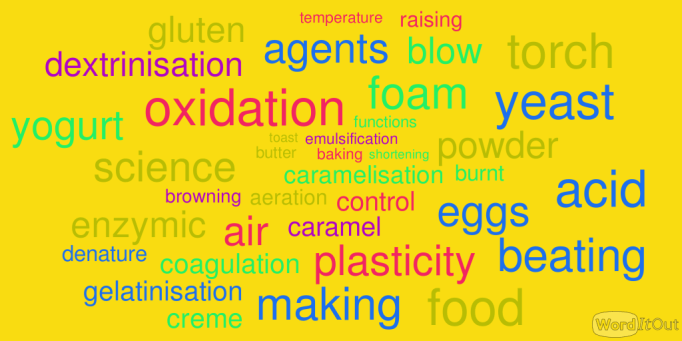
Word it out food scienceCaramel

Caramel is made by heating sugar until it turns brown. It is used as a flavouring or colouring for food and drink.
caramel

The science bit

Caramelisation is the process of cooking sugar until it turns brown.

If you cook the sugar too much it burns, blackens and breaks down to carbon.

Sugar used in cooking is called sucrose. When you heat sugar, water is removed and the sugar melts. As the sugar cooks it turns from sucrose to glucose and fructose.

Caramelisation starts at very high temperatures so you must not touch or taste until the food is cool.

Sugars in foods all caramelise.

Fructose is a sugar found in honey and fruits and it caramelises at low temperatures, so if you bake products such as cakes with honey, they cook to a darker colour.

Flour sugar is called maltose.


How is it used in food products?

Caramel is used in food and drink products to give a brown colour and creamy, sweet flavour and is labelled E150.

Caramel is the most widely used food colouring. It is made by heating sugar beet or sugar cane.

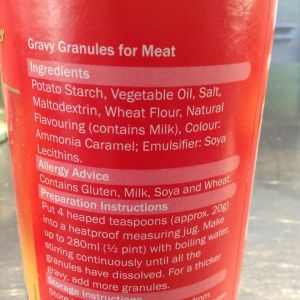
It is used in ice cream, biscuits, soya sauce, caramel sauce, gravy browning, cola, dessert mixes like Angel Delight.

Allergen alert – caramel can be made from wheat, barley and milk so people with allergies must check the ingredient list.

Experiment

Make some caramel

You need

A non stick pan, 50 g white sugar, wooden spoon

Making caramel is dangerous as it reaches a very high heat.

Put the sugar in the dry pan and place in the heat.

Let the sugar dissolve and gradually turn dark brown. Swirl the pan – try not to use a spoon as a metal spoon will get very hot.

Do not taste or dip your fingers in it! If hot caramel contacts your skin, run under the cold tap.

To make a praline, can add nuts such as almonds and walnuts to the sugar then pour onto a greased baking sheet, spread and leave to cool for about 1 hour.

Break into pieces or bash with a rolling pin.

What can I cook?

Caramel is used to make sweet dishes such as creme caramel which is a creamy custard cooked on top of a layer of caramel.

Creme caramel

Makes 2

Caramel

50 g sugar

2 tbs water

Custard

2 eggs

10 g caster sugar – 2 tsp

vanilla extract

200 ml whole milk

Method

Heat the oven to 150C/Gas2. You need to ramekin dishes or oven proof tea cup  to cook the custard in.

Make the caramel by heating the sugar and water in a saucepan to dissolve the sugar, stirring until the sugar dissolves. Boil without stirring until the sugar turns dark brown.

Pour the caramel into each of the ramekin dishes and leave to cool.

Whisk the eggs, sugar and vanilla extract with a whisk until smooth. Beat in the milk.

Stain into a measuring jug then pour into each of the ramekins.

Put the ramekins in a roasting tin which is half filled with boiling water.

Cook for 20-30 minutes in the oven until the custard is set.

Cool before serving. Chill in the fridge if possible.

To serve loosen the edges of the custard, cover with a plate and tip out the custard onto the plate with the caramel topping.


Oranges in caramel – serves 4

Slices of orange soaked in caramel sauce – delicious with Greek yogurt.

Ingredients

2 large oranges

100 g sugar

100 ml water

Method

Prepare the oranges by cutting off the peel with a sharp knife.

Slice each orange into very thin rounds and put in a dish along with any of the juice.

To make the caramel, heat the sugar and water in a large saucepan and swirl around to dissolve the sugar. Bring to the boil without stirring and let the syrup become a dark gold colour.

Add the oranges to the pan and stir very quickly to absorb the caramel. If you take too long the caramel will stick to the pan. Tip the oranges onto a flat plate and leave to cool.

Take care not to touch or taste the caramel as it reaches a very high temperature!


Did you know

The lady owner of a grocery shop in Seaford, Sussex made up jars of caramel syrup by heating sugar until golden brown and then adding water. She sold it to customers to use in gravies and puddings.


To do

Use the internet to find 10 products which have caramel as one of their ingredients. In each case explain why it is used.

Why do I need to know the science of caramelisation?

Burnt toast


Burnt toast

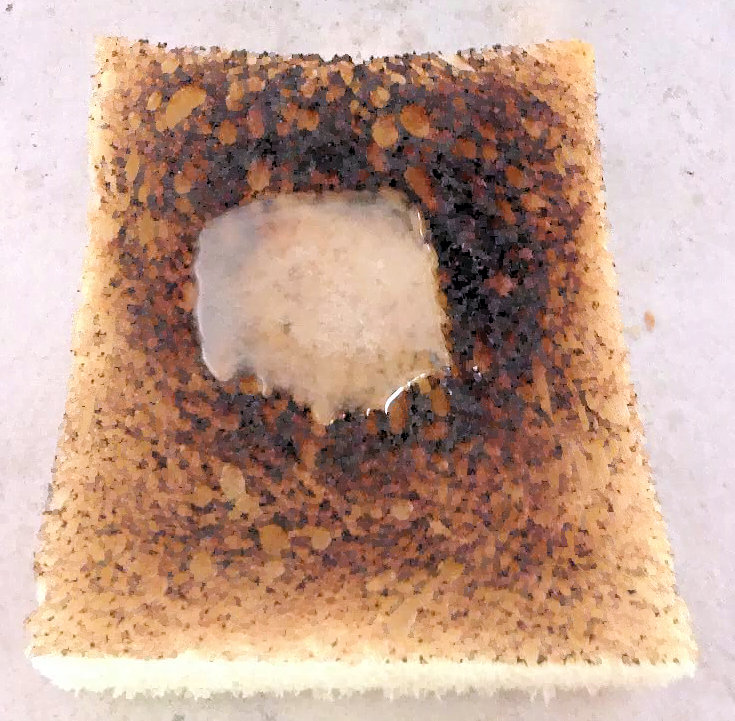
You can’t really eat this experiment but it shows the difference between dextrinisation and caramelisation.

burnt toast

You need

A piece of white bread

A teaspoon of icing sugar mixed with a tiny, tiny amount of water

Either a grill or a blow torch – which is more fun!

A baking tray

What to do

Put the slice of bread on a baking tray and drop a blob of the icing mixture on the middle.

Grill the bread and sugar or burn with a blow torch until the bread changes colour.

Watch the changes in the bread – dextrinisation – and the sugar – caramelisation.

Don’t eat the toast until the caramelised sugar is cool!

The toast should taste slightly sweet – dextrin – and the sugar will taste like toffee.


The science bit

When dry starch is heated – like the flour in bread, a brown substance called dextrin is formed.

The food goes through a chemical reaction where starch breaks down into dextrin which is a slightly sweet, brown substance.

Caramelisation is the process of cooking sugar until it turns brown. All sugars caramelise.


Creme brulee is made by caramelising the top layer of sugar on a custard.