Healthy meal for a 4 year old

How to use the Nutrition Program to test a healthy meal for a 4 year old.

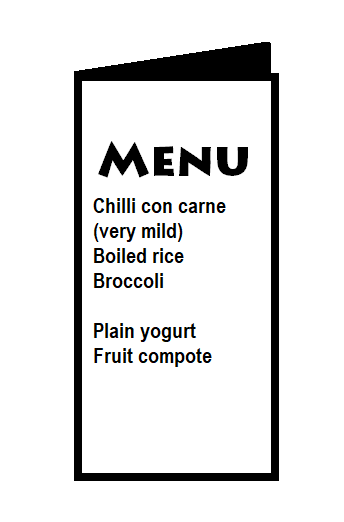
  1. Choose your menu – mine is going to be Chilli con carne (mild), Boiled rice, broccoli, with plain yogurt and Fruit compote.
Put the recipes into My Recipes in Nutrition Program – Chilli con carne and Fruit compote
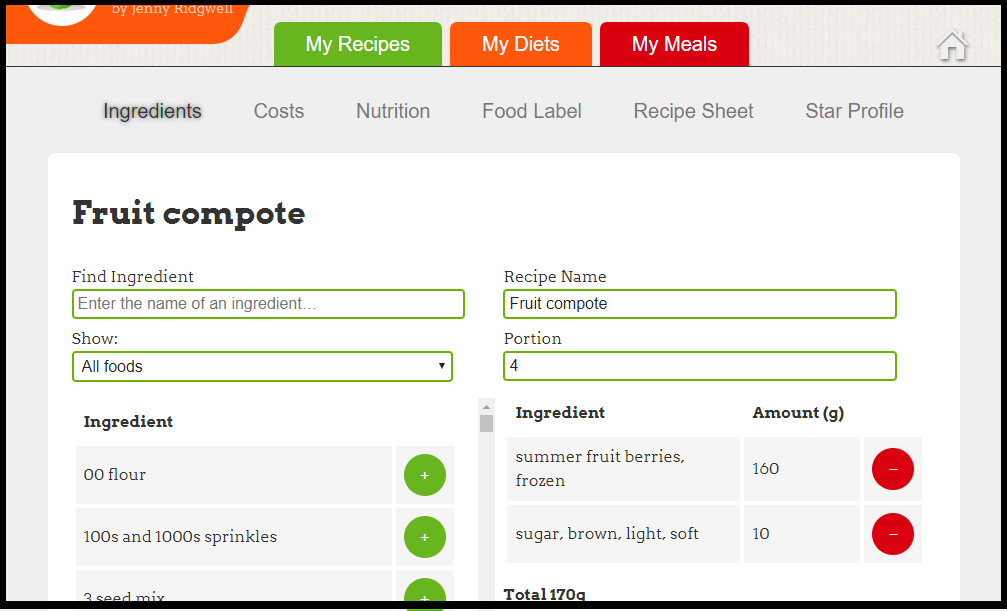
This shows the simple Fruit compote ingredients.

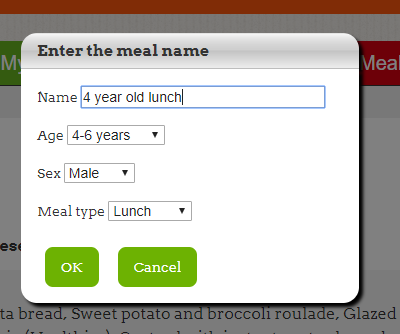
3. Go to My Meals and Enter the meal name – my example Name 4 year old lunch, Choose the Age 4-6 years, Sex – male or female, Meal type Lunch

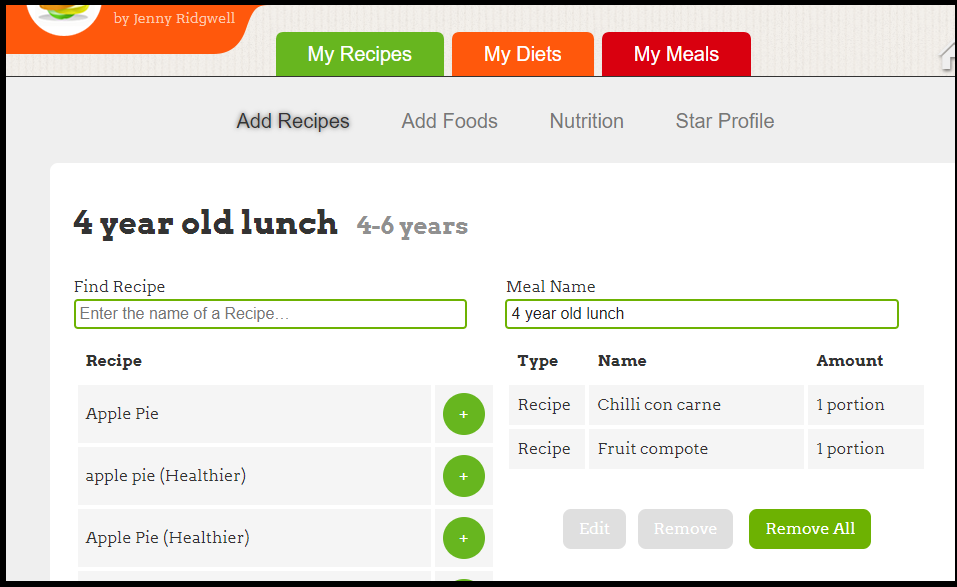
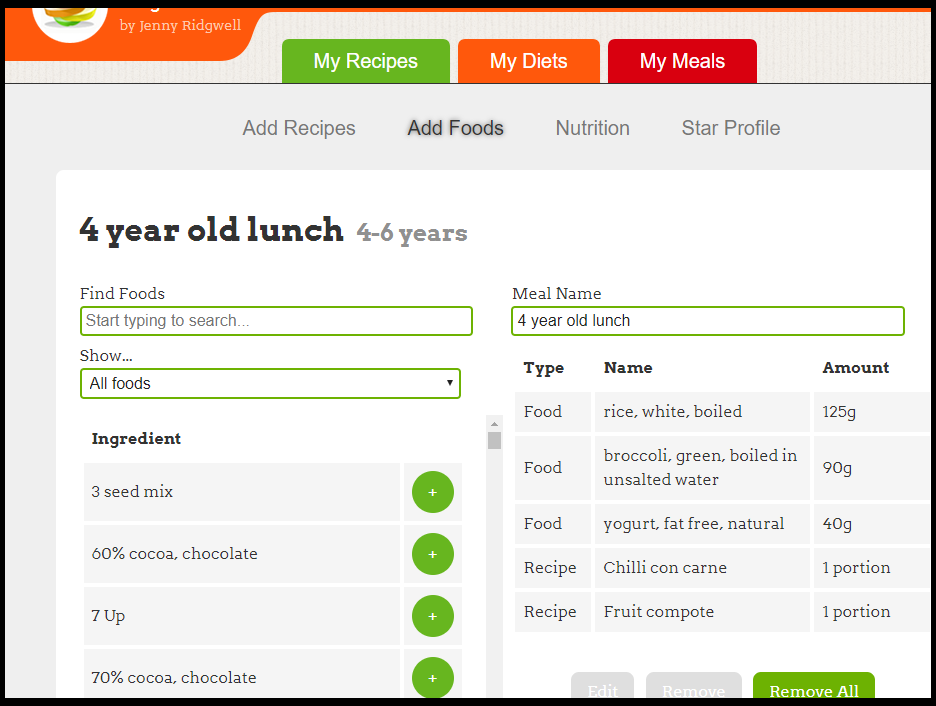
Add Recipes to the lunch – in this case, Chilli con carne and Fruit compote – the ones you have made. It adds 1 portion.
 

4.  Now Add Foods – these are foods on the database that are already cooked. In this example I am adding a portion of rice, white, boiled, then broccoli boiled in unsalted water, then yogurt, fat free, natural.

5. The meal is now complete so look at Nutrition.  The Program analyses the meal for a 4-6 year old and shows you the % of Recommended Meal Intake.
You can see that the meal is 143% of what is needed for 4-6 year old so I need to cut down the portion size of the recipe.
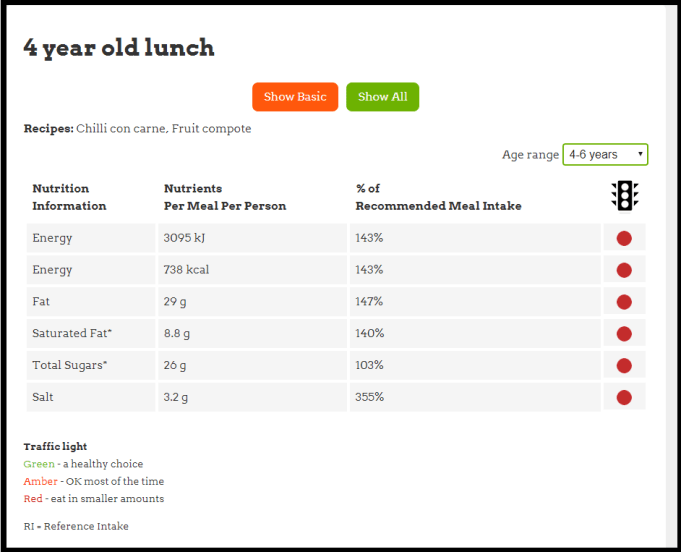
4 year old meal nutrition

The Traffic lights are showing red and Salt shows 355% which is much too high. So lots of work to be done!


How to make Seitan

Seitan is a cooked version of gluten balls that we make for food science lessons.

Seitan is one ingredient – wheat gluten – and is used as a protein vegan meat alternative. If you have coeliac disease, do not eat it!

The word seitan is Japanese and tit was used for wheat gluten from 1961 by a macrobiotic called George Ohsawa. The Chinese developed a wheat gluten product hundreds of years ago as a meat substitute. It has been called mock sausage or mock turtle because of its chewy texture.

Seitan is sometimes called wheat meat and it is chewy in its raw state, and it needs cooking with added flavour.

Here’s how it’s made from wheat flour. The starch washing process takes 10-15 minutes and you can buy gluten ready made.

How to make seitan

Mix 500 g strong flour and water to form a dough then soak the dough ball in cold water for 4 hours. This helps with washing.

Knead the dough and place in a muslin cloth and rinse out the starch

When the water runs clear the gluten ball is ready. This takes 10 – 15 minutes.

Drain and form the gluten ball into a long roll, wrap in foil and steam for 1 hour.

Cut the dough into pieces.

Prepare a vegetable stock and drop in the gluten pieces and cook for 30 minutes.

Serve straight away.

Steamed and cooled seitan will keep in the fridge for 1 week and can be frozen.

Thanks to Basic Homemade Seitan

Huffington Post shows how to do it and how to spice it up. They add flavours like tamari to the flour before they rinse out the starch – but the flavours will go in the washout!

Issues about vegan food PETA  

Places to eat Seitan in London

Temple of Seitan

Young vegans

Serves vegan pie and mash and Seitan and ale pie which is their ‘signature vegan steak’.

Plan a menu

For Hospitality and Catering students here are a few tips on menu planning.

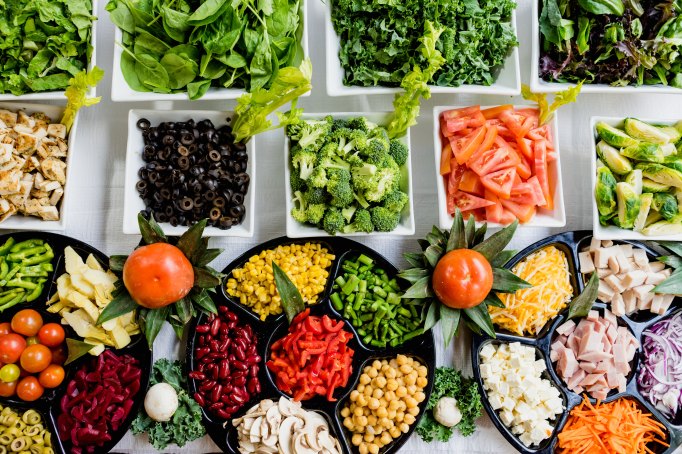
Choose foods with different colours and textures for an appetising choice.

Serve food when it is in season – like fresh salad in summertime.


Dan Gold

Present food attractively using interesting dishes and unusual garnishes and decorations.

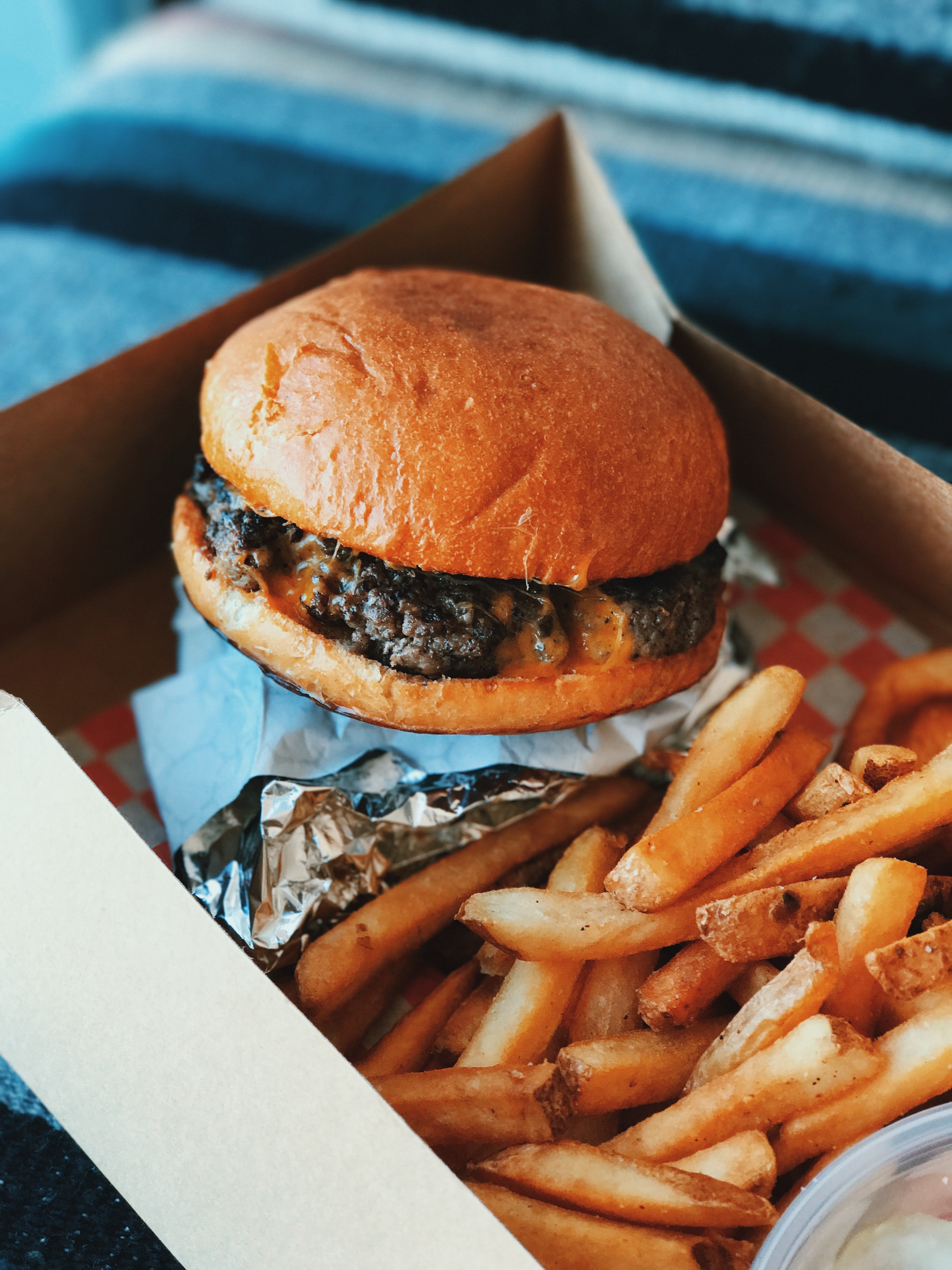
Make healthy choices and avoid serving too much fried food or dishes which are high calorie.


unsplash-logokayleigh harrington
What age group is eating your menu? Think about portion sizes and dietary choices.

Taylor Kiser

Functions of nutrients

These are the Hover overs used on the Nutrition Program to help you find the function of nutrients. The Program shows you what nutrients are in your recipes.

You need these details for

WJEC Vocational Award Level 1/2 Hospitality and Catering Unit 2 AC1.1 Describe functions of nutrients in the human body 

Energy – Measured in KJ and Kcal. Needed to keep us alive and active.
Protein – Needed for growth and repair, a source of energy.
Carbohydrates – A source of energy.
Total sugars are all types of sugar in food. A source of energy.
Fat – Good source of energy and supplies essential fatty acids that the body can’t make.
Saturated fat – Too much saturated fat can increase the cholesterol in the blood.
Trans fatty acids – These raise the type of cholesterol in the blood that increases the risk of heart disease.
Starch – Polysaccharide made up of glucose units. Used for energy.
Salt – Essential for cells and control of body fluids. Limit intake to 6g a day.
Sodium – Salt is made from sodium chloride.
Total sugars – All types of sugar in the food.
Fibre – Needed to keep the gut healthy and prevent constipation. Non Starch polysaccharide – needed for healthy digestive system.
NSP Fibre Non Starch polysaccharide – needed for healthy digestive system.
AOAC Fibre – Fibre measurement AOAC includes lignin and resistant starch – higher figure than NSP.
Fat soluble vitamins A and D, E
Vitamin A – Needed for growth, development and eyesight. Retinol and Carotene
Vitamin D – Regulates the amount of calcium and phosphate in the body.
Vitamin E – Helps protect cell membranes by acting as an antioxidant.
Water soluble vitamins -B1 (thiamine), B2 (riboflavin),B3 (niacin),B6 (pyridoxine)
Vitamin C – Needed for healthy skin and tissue, and to aid the absorption of iron. Ascorbic acid
Thiamin – Needed for the release of energy from carbohydrates.(B1)
Riboflavin – Helps release energy from carbohydrates.
Niacin – Needed for the release of energy from carbohydrates.
Vitamin B6 Pyridoxine – essential for good health and red blood metabolism.
Folate – Prevents neural tube defects in developing embryos. (B9)
Vitamin B12 – for blood cells and nerve function. (cobalamin),
Vitamin K – Helps protect cell membranes by acting as an antioxidant.
Minerals – calcium, iron, sodium, phosphorus, iodine,
Calcium – Helps build strong bones and teeth.
Iron – Helps make red blood cells, which carry oxygen around the body.
Phosphorus – Helps build strong bones and teeth.
Iodine – Helps make the thyroid hormones and keep metabolic rate healthy
Water – All body functions need water.

Function of Nutrients

Added sugar and snacks

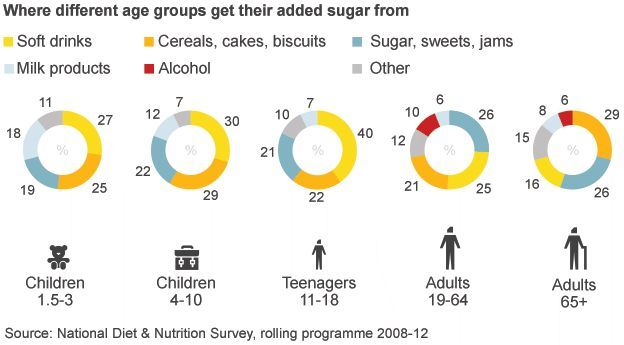
Chart showing where different age groups get their sugar

Snacks containing no more than 100 calories

  • Soreen malt lunchbox loaves (apple, banana or original malt)
  • Petits Filous fromage frais (strawberry and raspberry, strawberry, strawberry and apricot, strawberry and banana)
  • Fruit Shoot hydro water in apple and blackcurrant flavour
  • Fresh or tinned fruit salad
  • Chopped vegetables and lower fat hummus
  • Plain rice cakes or crackers with lower fat cheese
  • Sugar-free jelly
  • One crumpet
  • One scotch pancake

Source: Public Health England

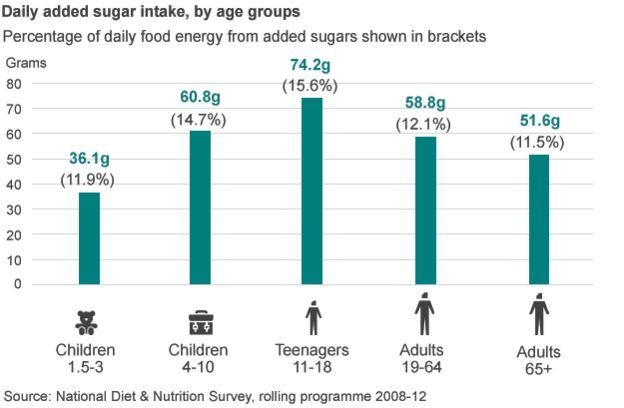
Chart showing daily added sugar intake by age group