Vegan Gyozas

Gyzsa wrapper

You can buy ready made gyoza dumpling wrappers as they are tricky to make. Strong flour is used as it is higher in the protein, gluten which helps the wrappers stretch as you roll out the balls of dough.

Handy tip – watch a Youtube video to see how to mix and roll – this dough is tricky to master! It has taken me 3 attempts to get sorted.

Makes 12-14 wrappers for 12-14 gyozas

Vegan gyozas with soya dip

Ingredients

200g strong flour salt

salt

About 100 ml boiling water 

Cornflour for dusting the work surface

Filling

Filling

Vegan Filling

3cm of ginger peeled and grated 20g

Soya sauce 1tbs 15ml

Miso paste 1 tsp

Very finely chopped pieces of a range of vegetables – red pepper, cauliflower, cabbage, spring onion, mushroom, beansprouts

15g frozen peas

Toasted sesame seeds, 1 tbs

Soya sauce 1-2 tbs

Miso paste tsp 20g

Toasted sesame oil 1 tsp

Method

Put the flour and salt in a bowl.

Gradually stir in the boiling water with a spatula and work with your  hands to form a dough. You may need more or less water, depending on the dryness of the flour.

Knead for 5 minutes then roll into a log about 3 cm diameter and cut in half. Use cornflour to stop the dough sticking.  

Wrap in cling film and leave to rest in the fridge for 30 minutes – this is needed to let the gluten relax and develop.

Unwrap the dough. Sprinkle a little cornflour on the work surface and cut each log into 8 equal sized pieces – so 16 in total.

Cover the dough with damp T towel or wet paper towel to stop it drying out.

Using a rolling pin, roll out the dough pieces as thinly as possible, to a 10-12 cm circle on a surface dusted with cornflour. The thinner the skin the crispier the gyoza and the wrapper is less doughy when cooked.

When each circle is complete, put on a plate and cover with a damp cloth. You can freeze or wrap in cling film and store in the fridge for 3-4 days,

Make the filling while the dough is resting. Finely chop all of your choice of vegetables – the total weight is about 250g.

To season stir in the soy sauce, sesame oil, black pepper and some miso paste if used.

To make up the gyoza, take one circle at a time and wet the edges. Fill with the vegetable mixture then seal and pleat like a pastie. Check online to see how it is done.

Heat 1 tbs oil in a large non-stick frying pan over medium heat. When hot, put the gyoza in a single layer, flat side down.

Gyozas frying in a little oil

Cook until the bottom of the gyoza turns golden brown for about 3 minutes.

Lift off the lid to evaporate any remaining water. Add 1 tsp sesame oil around the frying pan.

Cook uncovered until the gyoza is crisp on the bottom. 

Lift onto a plate and serve with dipping sauce. For the dipping sauce, combine the sauce ingredients in a small plate and mix all together. 

To save gyoza for later, put the gyoza on a baking sheet leaving some space between to keep them from sticking, and put it in freezer. Transfer frozen gyoza into a freezer bag and store in the freezer up to a month. When you use frozen gyoza, do not defrost. Cook while frozen and steam for extra 1-2 minutes.

Put the results into the Nutrition Program.


Gyoza nutrition
Gyoza nutrition
Nutrition label
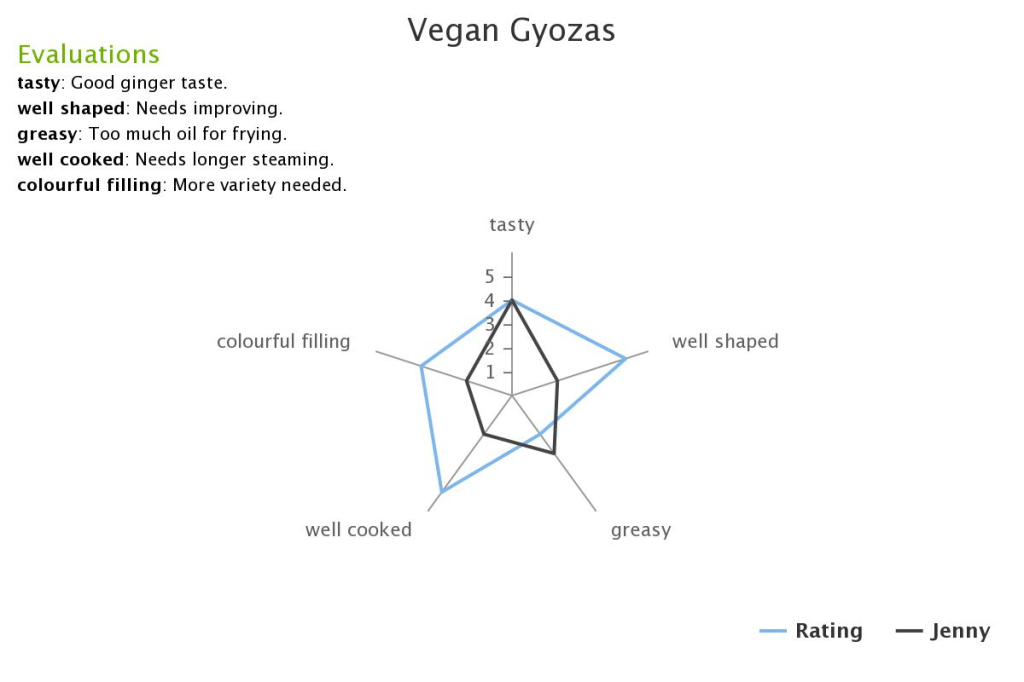
Gyoza evaluation after tasting

Chickpea, spinach and red pepper curry – vegan

Chickpeas need plenty of spices and flavouring to make this delicious curry.

.Whole spices give more flavour than ground spices so it is good to whizz the coriander and cumin in a grinder or pound them before cooking. Then add the fresh ginger and garlic.

Serves 2 – double to serve 4

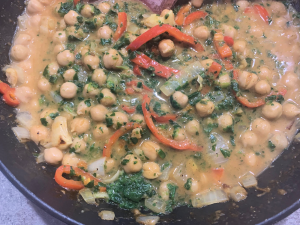
Vegan chickpea, spinach and red pepper curry

Ingredients

1 tbs vegetable oil, 30g

Small onion 60g, finely diced

3cm fresh ginger, peeled and sliced, 25g

2 cloves garlic, peeled and sliced, 5g

1 tbs coriander seeds, 10g

1 tbs cumin seeds, 10g

½ can coconut milk 150ml

2 tbs tomato ketchup = 30g

1 tsp garam masala – optional

½ 400g chickpeas, drained = 200g

½  red pepper, cut into slices 70g

Spinach – fresh or frozen 50g

Salt and black pepper

Method

  1. Heat the oil in a large frying pan and stir in the onion and cook gently for 2-3 minutes.
  2. Prepare the spice mixture. Whizz the ginger, garlic, coriander and cumin seeds in a processor until smooth.
  3. Add the spice mixture to the onions and cook and stir for a further 2-3 minutes.
  4. Stir in the coconut milk and tomato ketchup then pour in some of the chickpea water and bring to the boil.
  5. Add the garam masala, drained chickpeas and red pepper and stir and heat until it begins to bubble.
  6. If using fresh spinach, put the leaves into the sauce. If using frozen spinach, chop the spinach and heat to allow to defrost in the hot sauce.
  7. Stir, and add salt and pepper to taste.
  8. Serve with a cucumber or tomato spiced salad or boiled rice.

Use the Nutrition Program to carry out the analysis

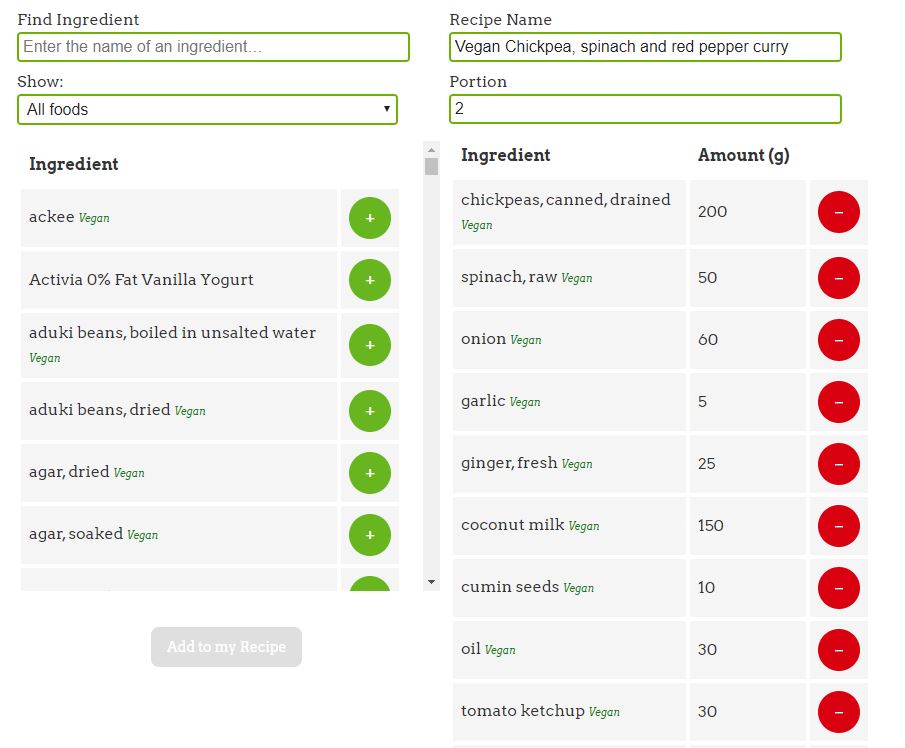
List the ingredients, and their weight and check that they say Vegan.

Check that the ingredients show Vegan.

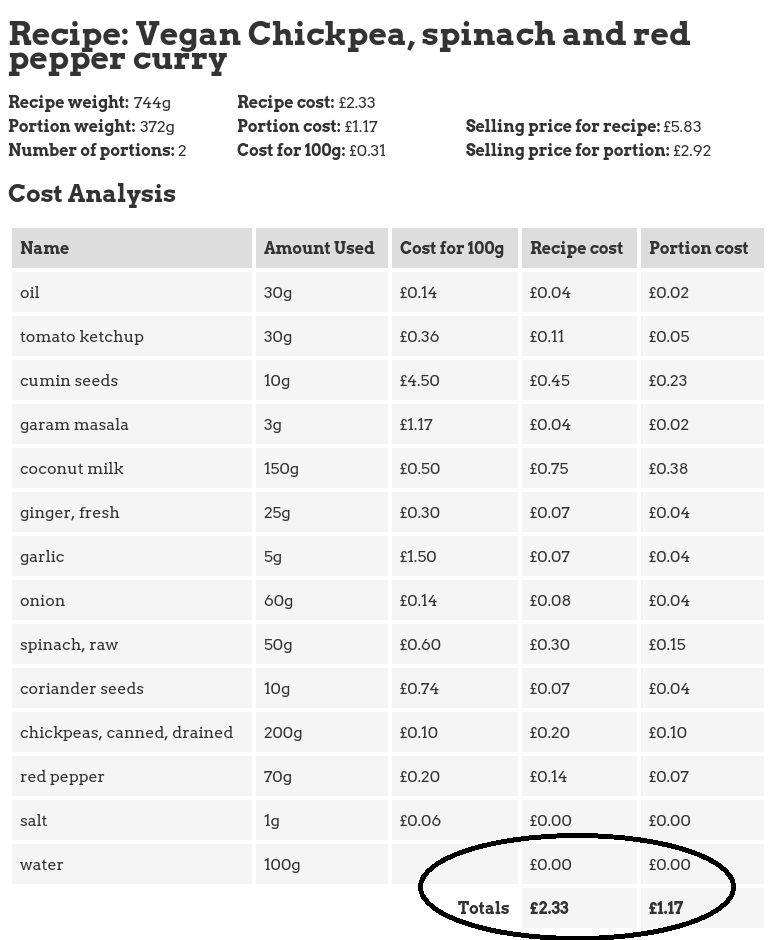
Look at Costs for a portion or whole recipe.

This shows total cost of recipe and a portion.

Check the Nutrition – Choose Show 8 to show energy, fat, saturated fat, carbohydrate, total sugars, protein, fibre and salt. You can see the percentage of  RI Reference Intake % and the Traffic Light – if any show red, then the recipe may need changing

This shows RI Reference Intake of the recipe – this recipe is low in energy.

.

Click Food Label and insert a photo of your work.

This shows Traffic Lights, nutrition and ingredients.

Now do a Recipe Sheet and put in the Method.

Method is really useful.

Finally do the Star Profile to show how it looks and tastes.

Add your tasting notes


Vegan lasagne with aubergine

Made from aubergine and soya mince with oat milk for the bechamel sauce

In this Vegan lasagne I use vegan ingredients to replace meat lasagne recipe  

  • Soya mince replaces meat mince
  • Plant based drinks like oat, soya, almond replace milk
  • Vegan spread replaces butter

Things to watch for

Make sure the lasagne sheets are not made from egg otherwise they are not vegan. There are plenty of plant based drinks to replace milk – this recipe uses unsweetened soya drink. The meat free sauce needs careful flavouring – herbs, tomatoes, vegetarian seasoning, salt and pepper. Taste after it has cooked.

Use Nutrition Program to look at nutrition

Serves 4
The recipe is made for 4 as it is hard to scale it down to serve 2.

Ingredients

180g meat free mince (Sainsburys) made from soya
100ml water
1 tbs vegetable oil
Small aubergine 150g cut into slices then cubes
1 small onion 90g, peeled and finely diced
2 cloves garlic, crushed
½ of a 400g can of tomatoes (200g + juice)
1 tbs tomato ketchup
Large pinch mixed, dried herbs
Vegan stock cube or 1 tsp vegan bouillon powder
Salt and pepper
Vegan white sauce
2 tbs vegetable oil
40g plain flour
400ml plant based drink – soya, oat, almond
Salt, pepper, grated nutmeg

4-6 sheets dried egg free lasagne 60 – 90g

Method

  1. Mix the meat free mince with water and stir so it absorbs and swells.
  2. Gently fry the aubergine cubes, onion and garlic in oil in a large frying pan for 3-4 minutes until they soften, stirring all the time.
  3. Add the softened mince and stir in the tomatoes, tomato ketchup and a little water to make the sauce.
  4. Season with vegan bouillon and mixed herbs. Cook gently for 5 minutes.
  5. Make the white sauce. Heat the oil and flour in a pan for a minute to mix together then gently whisk in the plant-based drink until the sauce thickens.
  6. Season with salt, pepper and grated nutmeg.
  7. The lasagne is ready to assemble. Choose a dish that will serve 4.
  8. Put half the meat free mixture in the base of the dish, then layer on half of the sheets of lasagne. 
  9. Spread in the remaining meat free mixture and top with the lasagne sheets.
  10. Pour over the white sauce so that it covers the lasagne sheets.
  11. To serve, set the oven to 150°C and bake 20 minute to thoroughly heat through. It should reach 75°C. Test with a food probe.

Vegan red and yellow pepper risotto

To make a risotto, the rice needs to be stirred during cooking

Vegan Risotto with yellow and red peppers

Serves 2

Ingredients

1 small red onion, peeled and cut into small pieces, 70g

1 clove garlic, peeled and crushed

2 tbs vegetable oil

120g risotto or other rice

1/2 cob of sweetcorn, with seeds removed (50g seeds)

1 red and 1 yellow pepper (about 100g) deseeded and cut into chunks

2 tbs vegetable oil

1 tsp vegan bouillon powder or 1 vegan stock cube

400ml boiling water

2 spring onions, washed and finely chopped

Method

Roasted peppers
Fry onion and sweetcorn

Preheat the oven 200C.

Fry the onion and the garlic in a large frying pan over a gentle heat to soften the onion. Stir often and after 5 minutes add the rice.

Put the chunks of pepper in a roasting tin and toss in the oil. Put in the oven and roast for 20 minutes so that the peppers soften and the sugars caramelise, giving some brown edges and added flavour.

Add the sweetcorn seeds to the rice mixture.

Mix the boiling water in a jug with the bouillon powder or stock cube. Stir slowly into the rice mixture, letting the rice absorb the liquid.

Stir and cook the rice for 10-15 minutes until the rice softens. Add the sweetcorn 2 minutes before the end of cooking.

Remove the peppers from the oven and spoon out of the oil, leaving excess oil in the roasting pan.

Gently toss the red and yellow peppers into the rice then taste and add more seasoning if needed.

Sprinkle over the finely chopped spring onions.

To do

Take photos of the dish.

Put the recipe ingredients into the Nutrition Program to look at the nutrition.

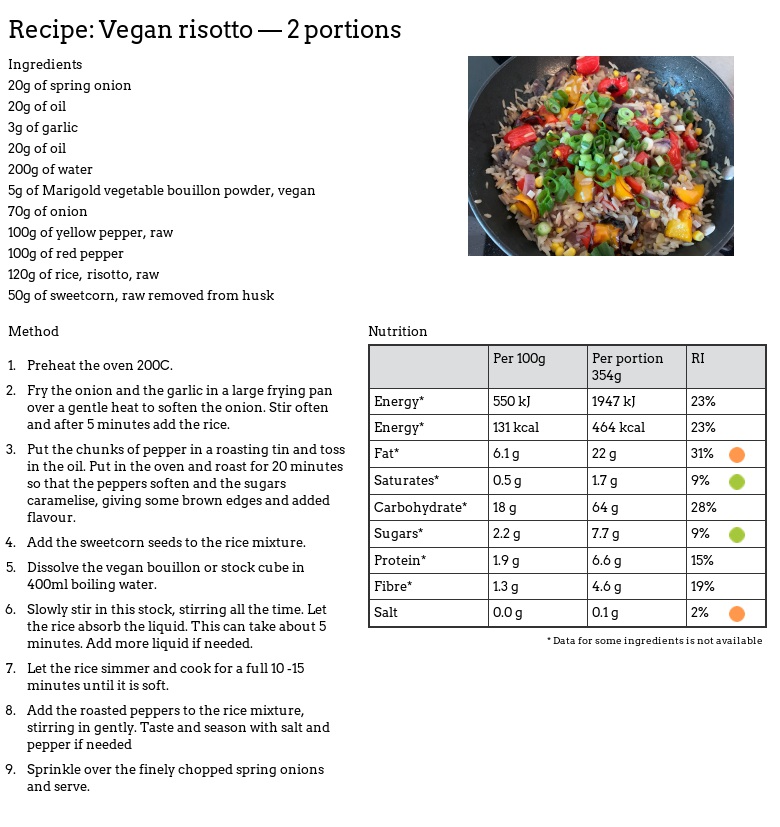
This is the food label – the arrow points to the Vegan label.

This is the Food Label – the risotto provides 464 kcal per 350g portion = 23% RI
See the allergens and the label Vegan

Write up the method so it is saved on your Recipe Sheet.

The risotto is a well balanced dish but more protein could be added.
Taste the risotto and create a star profile to show how it needs improving. This recipe needs extra protein and more flavour and longer cooking.

Nutrition Program and Vegan pasties

Find the nutritional value of your Vegan Pasties using the Nutrition Program.

See how much protein they provide compared with meat or cheese pasties. 

These are the ingredients:-

Pastry
140 g plain flour
70g vegetarian fat suitable for vegans
1-2 tablespoons water 
Pinch of salt

Vegetable Filling
Choose a range of vegetables to make up to 120g – grated carrot, finely chopped sweet potato, butternut squash, potato
Small piece finely chopped onion 20g
20 g frozen peas
Pinch mixed herbs
Salt and pepper
1 tsp sesame or flax seeds
Oil for brushing pastry

Vegan pasties with vegetables
  1. My Recipes – Vegan Pasties – makes 2
  2. Enter the ingredients
  3. Look at the Nutrition
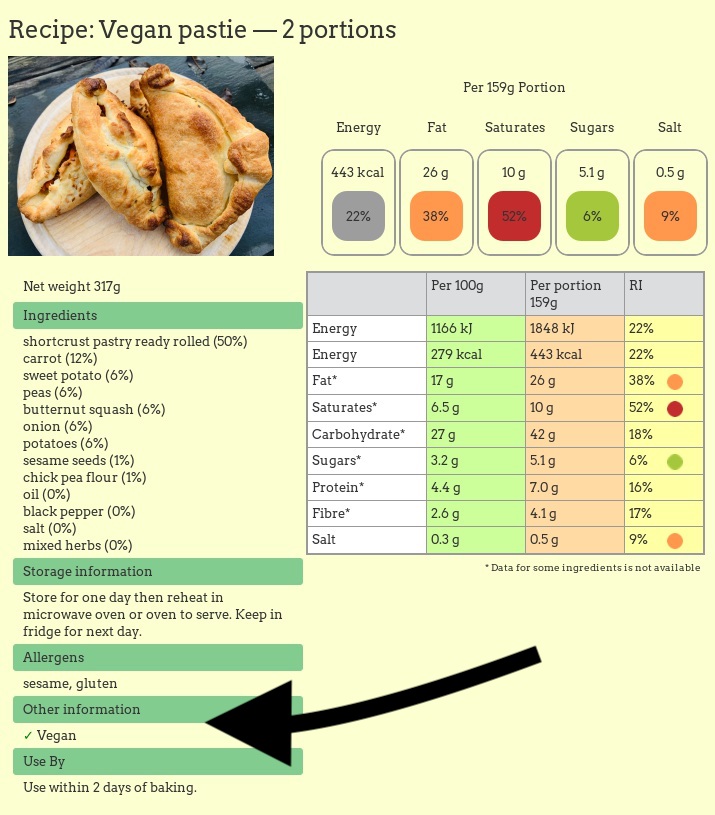
  4. Go to Food Label and put the photo, fill in the Storage info and Use by to show how to keep the pasties and how long to store them. Check that your recipe is Vegan.
  5. Go to Recipe Sheet and add your Method. Export the work.
2. Enter the ingredients – Check they are Vegan
3. Look at Nutrition – 4.4g protein
4. The food label shows ingredients, allergens, nutrition and if Vegan.
5. You can write your recipe method