
This is the Youtube link
Slide show for Marmite on toast
This is the Youtube link
This is the Youtube link

For my Chemical raising agents investigations I tested different raising agents in warm water. See the results on this link.
When the scones were baked I took photos. They are a bit burnt! I made batches with different raising agents to compare.

Presenting results
I used The Nutrition Program to present the results of the tasting. This is how it is done.
Open the Program
Click My Recipes and name one as Scones for test or something like that.
Put in each scone recipe in Ingredients.
Go to Star Profile.
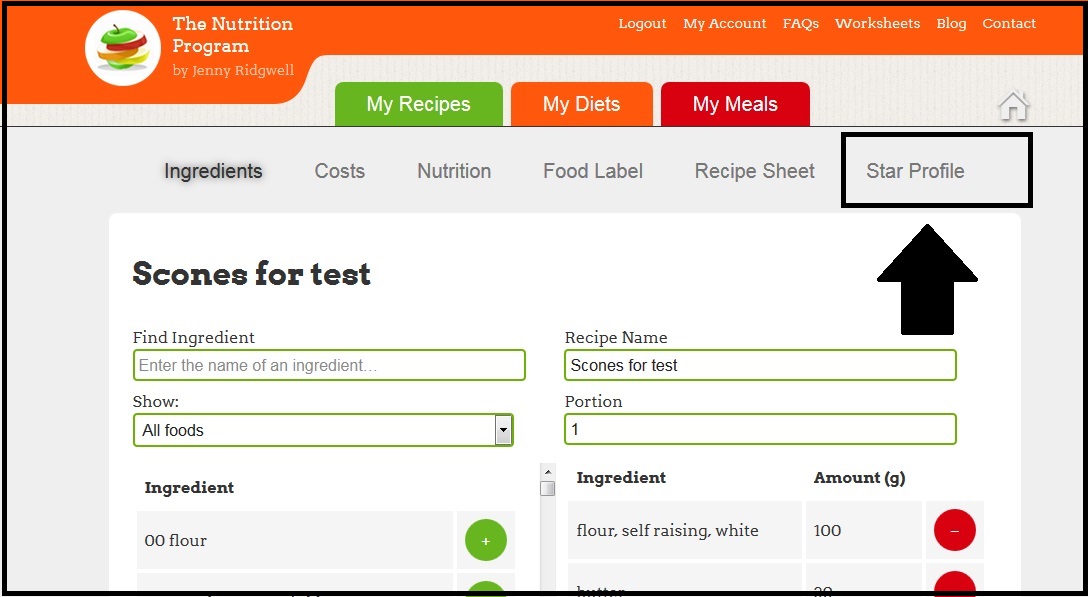
Star profile for chemical raising agents
For each Taster put in the name of the raising agents – I’ve chosen plain + baking powder, SR + baking powder, plain + bicarb and tartar, SR flour
Then think of Descriptors for sensory appraisal – your tasting work.
I’ve chosen light, well risen, crumbly, solid
Then I tasted the scones and gave each a mark out of 5 where 0 = not and 5= very.
This is function is added to The Nutrition Program for NEA 1 test – Click Hide Rating.

Star profile for chemical raising agents
I can now see the Star Profile with each scone tasted.
Then I can write my Evaluations.

Evaluation of raising agents
Then Download as JPG and write some comments

Full marks I hope!!
All this work and more appear in Food Science You Can Eat



Pickled onions with star anise, mustard seeds and peppercorns
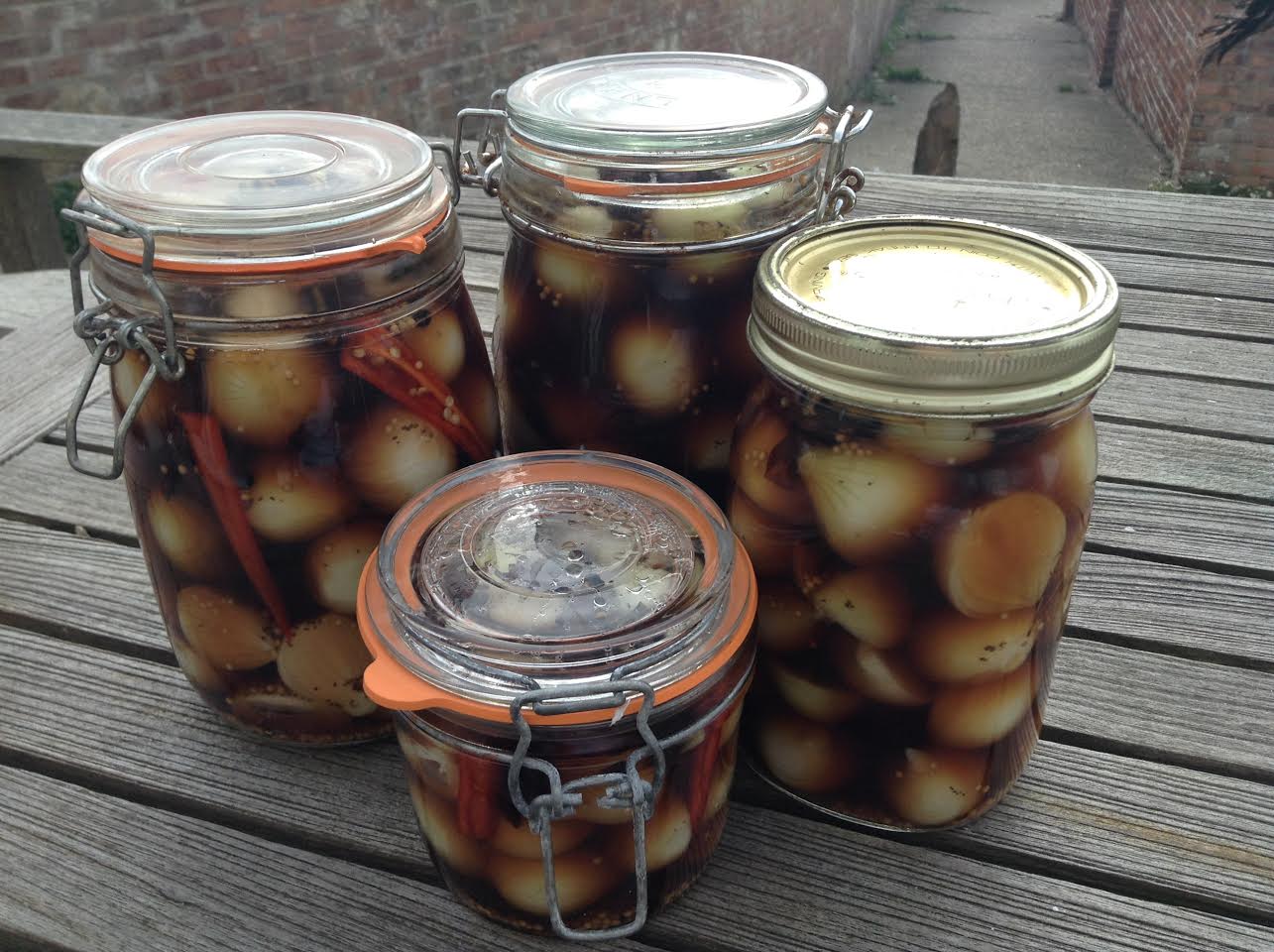
Seal in jars and leave for 6 weeks to infuse
Ingredients
600ml brown malt vinegar
500g small pickling onions
25g table salt
100g brown sugar
10 peppercorns
2tsp mustard seeds
4 star anise
(You can swap spices to your own taste so use coriander or cumin seeds, chillies and bay leaves.)
Method
The science bit
Adding salt to the onions before they are pickled, removes some of the water in the onion cells by osmosis. Removal of water helps the onions keep longer as bacteria, yeasts and moulds cannot multiply so quickly.
The onions are pickled in a sugar, spice and vinegar solution.
The vinegar changes the pH and prevents the enzymes and the microorganisms from working so the onions are preserved and keep for a long time.
My blog on Cooking in the 1970s
Here is the link to my pickled onion lesson of 1972.
It made the boys cry but the room had wonderful smells of pickling!
Kefir is the latest super food so I’m having a go at fermenting water kefir grains to ‘make an alternative to fizzy drink’ and that doesn’t mean champagne
Kefir is a fermented pro-biotic food made from fermenting micro-organisms. Water kefir is made from fermenting the kefir grains in sugar and water.
So the science on the website says:
The beneficial bacteria and yeasts present in the kefir grains metabolise the sugar and turn it into acetic acid.
The grains look like clear, colourless jelly and they are made of ‘lactobacillus hilgardii’.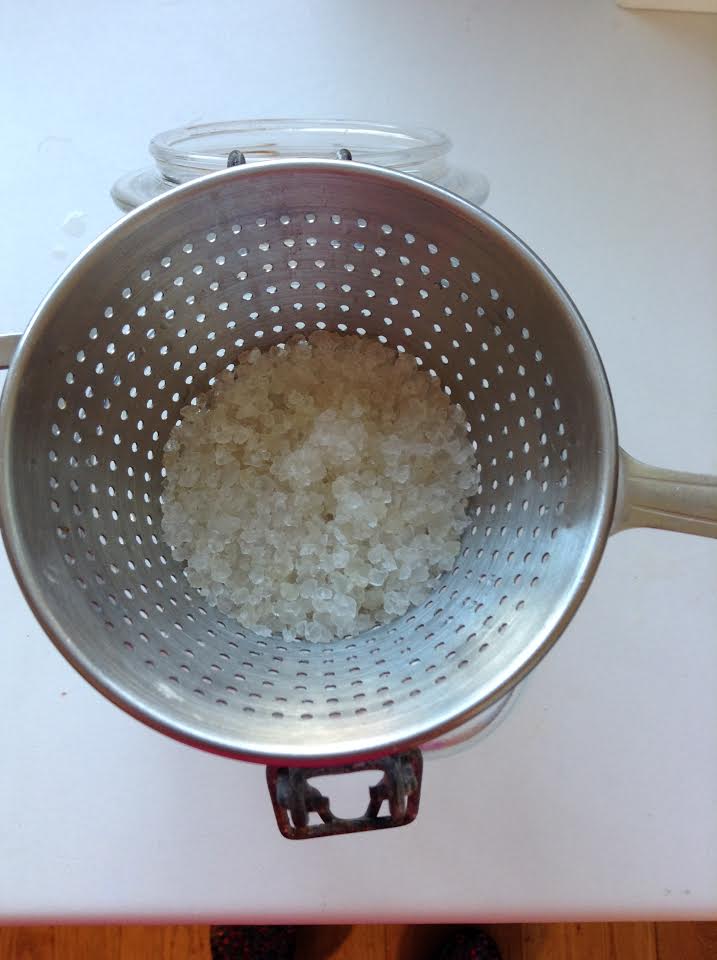
Method
Dissolve 60g of sugar in 750ml water.
Add the grains and some fruit flavours such as lemon and raisins or chopped ginger root.
Let it ferment in a glass jar for 24-72 hours with a J cloth as a soft lid.
strain the grains and put the strained liquid into smaller jars.
Leave 24-48 hours to ferment then chill and enjoy as a drink.
What the scientists think about kefir and probiotics.
‘There is no benefit to probiotics to repopulate gut bacteria – ref European Food Safety Authority.
Nutrition for 100ml
| Typical Values | per 100ml |
|---|---|
| Energy kJ | 243 |
| Energy kcal | 58 |
| Fat (g) | 3.0 |
| of which saturates (g) | 2.0 |
| Carbohydrates (g) | 4.6 |
| of which sugars (g) | 2.8 |
| Fibre (g) | 0.5 |
| Protein (g) | 3.2 |
| Salt (g) | 0.1 |
Milk kefir
Milk kefir is a natural probiotic, living culture and the grains look like small cauliflower florets. As the culture ferments the milk, these grains grow, creating new grains in the process.
Add a tablespoon of grains to about two cups of raw organic milk in a glass container and cover loosely to allow fermentation gases to escape. A piece of cheesecloth secured with an elastic band works very well.
After 24 hours strain with a plastic strainer into a container– do not use metal utensils. Place the grains that were caught in the strainer into another container with 2 cups of milk to make a fresh batch of kefir. The strained milk can be used or refrigerated until required. Repeat this process about every 18 – 24 hours.
 I met Monisha Bharadwaj on a Guild of Food Writer’s Food Trip to Hampshire with Hampshire Fare and it was the perfect time to ask about dahl. I’ve struggled to make dahl that tastes and looks delicious, yet exam boards seem to think is is a low level skill. Wrong! But why not ask the expert?
Monisha is an Indian Chef, TV chef, food writer, author and cookery teacher and she knows a lot about cooking dahl, rice and raita.
Jenny – Do you think dahl is simple dish to make?
Monisha – ‘You’ve got to have a lot of skills to make dahl. You need to know about sequence, proportion, balance and cooking time. How to cook the lentils properly to get the consistency right – getting the balance of spices and seasoning. There are many kinds of lentils and you need to know which type and colour to choose. Do you soak the lentils beforehand?
How long will you cook them to get the consistency you need – how thick or soupy should it be?
You need to get the spices and seasoning right to get the 6 tastes at the heart of Indian cooking – sweet, sour, salty, hot, bitter and astringent. For hot we use chilli, mustard and ginger. For bitter turmeric and cumin and for astringent turmeric and coriander.
Jenny – So how is dhal made?
Monisha – You need a high temperature frying oil to cook seeds, then onions, ginger and garlic.
Then add tomatoes, spice powder and lentils and cook with water until the lentils are soft. Taste and season with salt. Cook further if the lentils need to be softer.
Serve topped with coriander leaves.
Jenny – ‘When serving with rice – is that easy to cook?’
Monisha – ‘Cooking rice takes skill – knowing what rice to buy, what proportion of water to rice to use, the cooking time, draining and how to get it fluffy.’
Jenny – ‘So how do you cook rice?’
Monisha – ‘I wash the rice, fry spice seeds, add the rice and add 2 times the water by volume. Boil then reduce the heat, cover and cook for 10 minutes. Then leave for 5 minutes to fluff.
Jenny – ‘ Then serve with raita?’
Monisha – ‘Yes you can make it with grated cucumber, salt and pepper and plain yogurt.’
Jenny – ‘So Dahl, boiled rice and raita need high skills all round! Thanks’
 The Nutrition Program Blog