
We are encouraged to eat a rainbow of coloured fruits and vegetables. This way you eat a range of vitamins and minerals.
Micronutrients found in fruits and vegetables
Vitamins
Vitamin A is found in orange coloured fruits
Vitamin C
Calcium
Potassium
We are encouraged to eat a rainbow of coloured fruits and vegetables. This way you eat a range of vitamins and minerals.
Micronutrients found in fruits and vegetables
Vitamins
Vitamin A is found in orange coloured fruits
Vitamin C
Calcium
Potassium
These are definitions taken from GCSE Science which are very useful to use for Food Preparation and Nutrition GCSE NEA 1
A Hypothesis is
You are
My views on Food Science Investigations
Students have 8-10 hours for the Investigation – see Exam board requirements.
I have given a spectrum of ideas that can be explored, but there is much more science that can be discovered.
Higher levels for the science investigation are required for the top grades.
The Book and the Powerpoint show realistic Investigations that can be carried out for GCSE within the limits of the school food room.
I’ve chosen foods for investigations that are not expensive, as experiments can fail and food must be thrown away – a mixed message on food waste.
So there are challenges ahead!
Good luck with the Investigations. Jenny Ridgwell
Schools with Polish students have asked for ingredients to be added, so we included a few! Please help us add more.
Prymat breadcrumbs, Kucharek vegetable seasoning.

These are abbreviations (acronyms) for Nutrition Requirement and the maths behind the RIs used on the Program
 The ones we are using:
NRV is a guideline of the minimum amount of a particular vitamin or mineral required by the average person to stay healthy
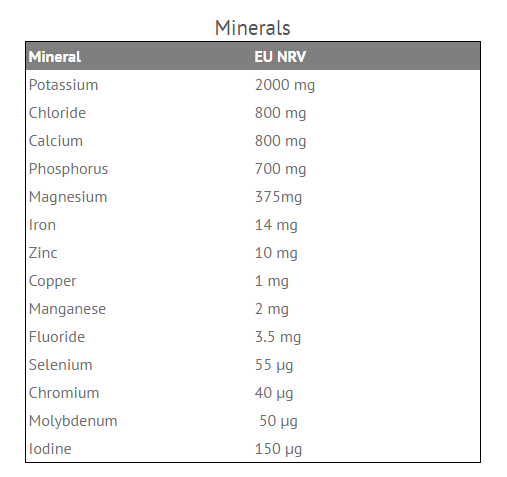
NRV minerals
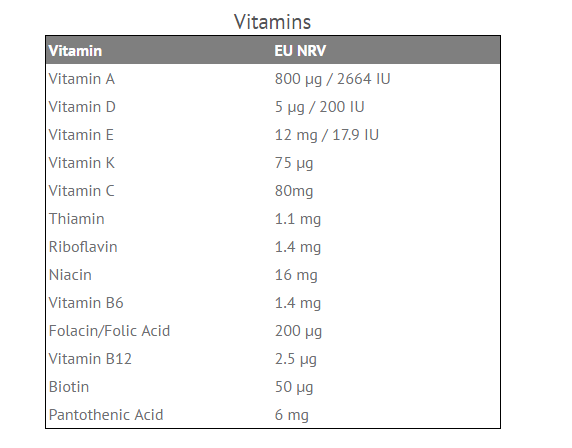
NRV Vitamins
Genetically modified maize was grown for the first time in the US and Canada in 1997.
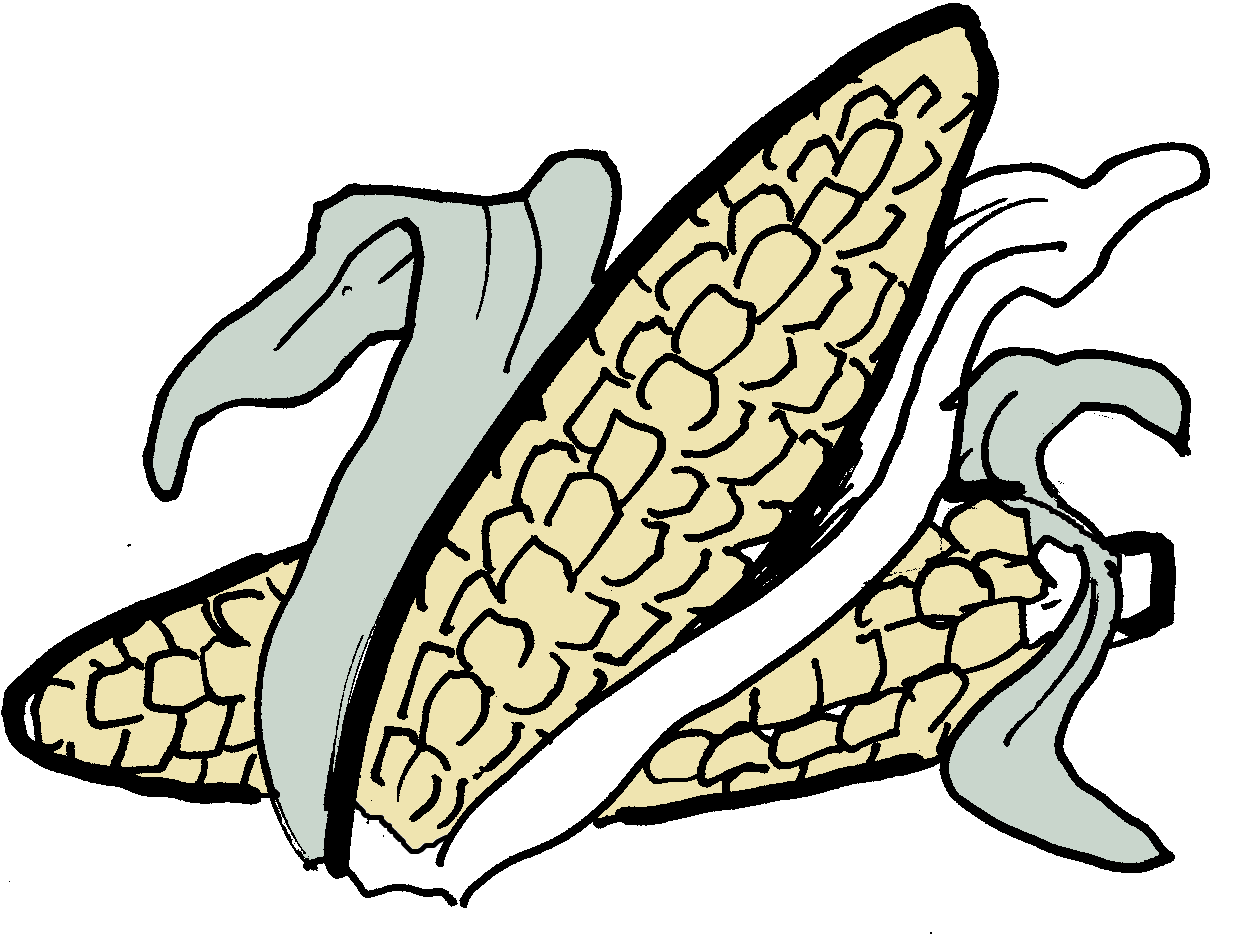
Is it GM?
Maize is the only GM crop that is commercially grown in the EU. It’s used for feeding livestock and for the starch industry.
GM maize has insect resistance and herbicide tolerance.Now, about 80 per cent of the maize produced in the US is genetically modified.
GM EU maize is resistant to the corn borer which chews through maize stalks so the plant tips over.
EU GM maize cannot be mixed with conventional maize and food and feed made from GM maize must be labelled.
Maize starch is used for corn syrup, glucose and dextrose, modified starch and sugar substitutes.
GM crops enter Britain mainly as animal feed. There is no commercial growing, but there have been experimental trials of GM potatoes, wheat and flax.
GM Maize is suitable for England.
Organic food has to be GM free.
A reported 70% of US supermarket processed food contains GM.
Do UK supermarkets sell GM foods? Difficult to know – by EU law it should be on the label.
Waitrose No food is genetically modified. Popcorn lovers day
 The Nutrition Program Blog