

On Tuesday July 20th 2010 Marguerite Patten CBE aged 94, came to tea at my home. In 2007, she received the Woman of the Year, Lifetime Achievement Award, and I think she deserved to be a Dame.
As Marguerite said to the invitation – ‘It sounds like a very happy occasion.’
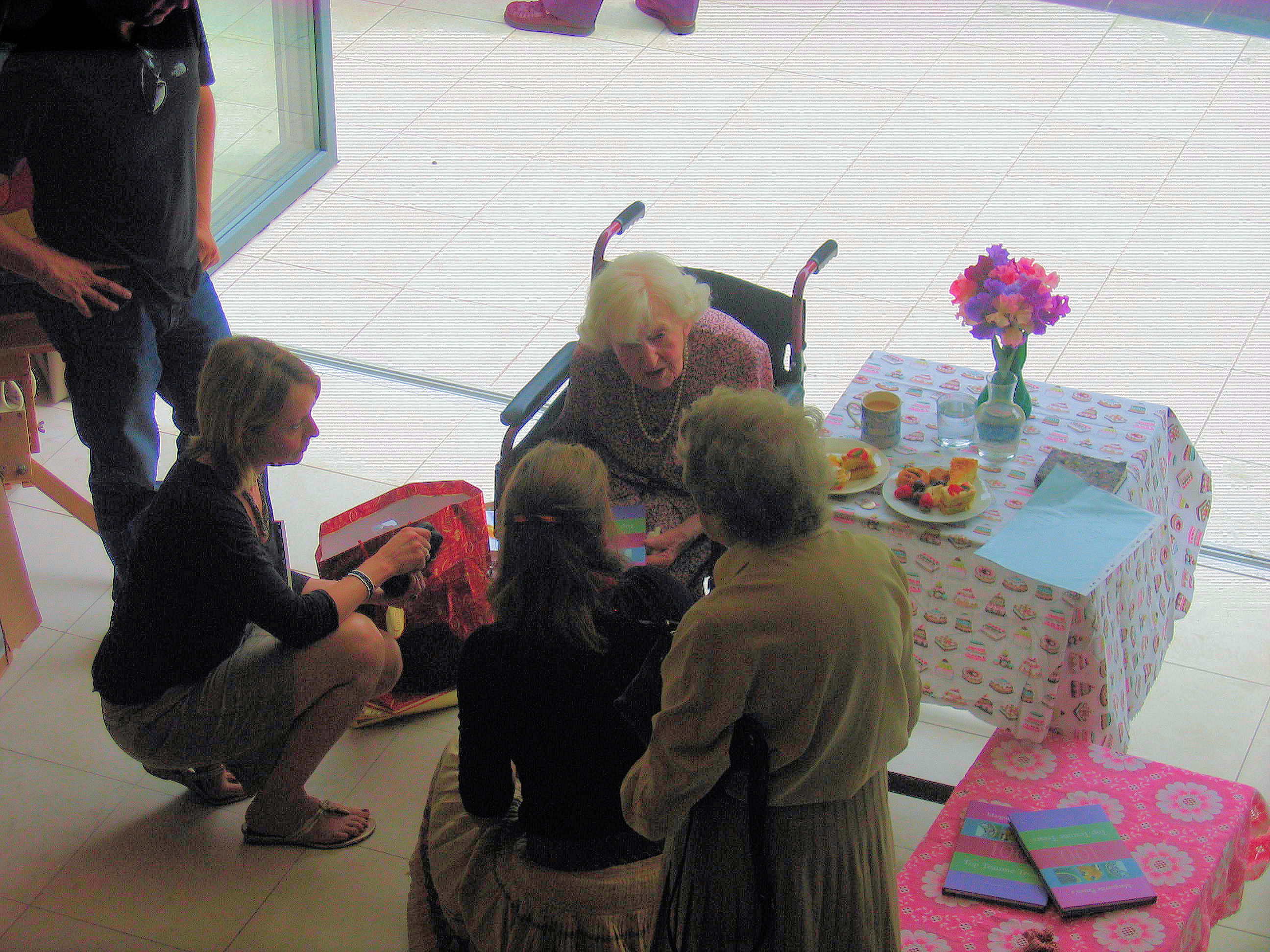
 She arrived promptly at 1.30 for her 2 o’clock start and set herself up in our house, surrounded by tables laden with the cakes, biscuits and sandwiches that the large audience had brought. Some guests even arrived dressed in wartime costumes – they had come to worship her as part of our Villa Events. After her fascinating talk – which lasted half an hour as I’d asked, she answered questions and went on long after the 4 o’clock deadline which we’d planned. You can see from the pictures how people arrived with books for her to sign and she brought along copies of her latest books and we raised over £400 in funds for Martlets Hospice in Hove.
During World War 11 Marguerite worked for the Ministry of Food and gave demonstrations and advice on how to eke out the meagre food rations, and a recent book shows she was an expert on Spam. After the war, Marguerite was at the forefront of food innovations.
Pressure cookers, mixers, refrigerators, margarine… the stories go on. When the microwave cooker was invented, she was out there demonstrating food skills. Her work continued with TV and radio broadcasts and she said she was not a celebrity chef, but a home economist.



This is part of the letter I wrote to her after the visit:
Dear Marguerite, I was so honoured that you could come and tell us the amazing story of your life and work – it was an inspiration to all that attended. We really did hear from a ‘living legend’ and you recounted the stories of war time Britain and its food with such passion. The message that I came away with was to support local, fresh food and to inspire the younger generation to do the same.
I watched as people came to speak to you and get their books signed. They were so pleased to meet you and some said that it had been their dream, which has now come true.
Best wishes Jenny Ridgwell
Marguerite has always influenced my passion for food.
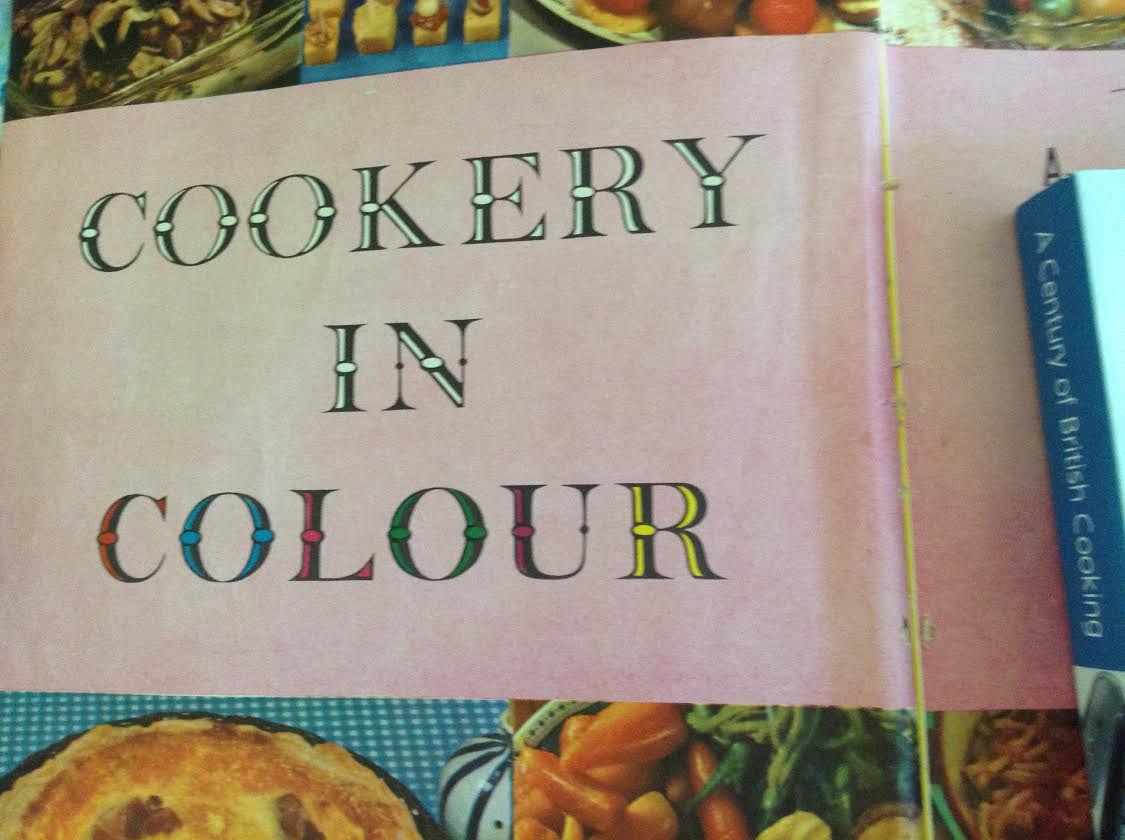
In 1960 at school I was ‘too clever’ to take part in cooking lessons but I was given Cookery in Colour by Marguerite Patten.
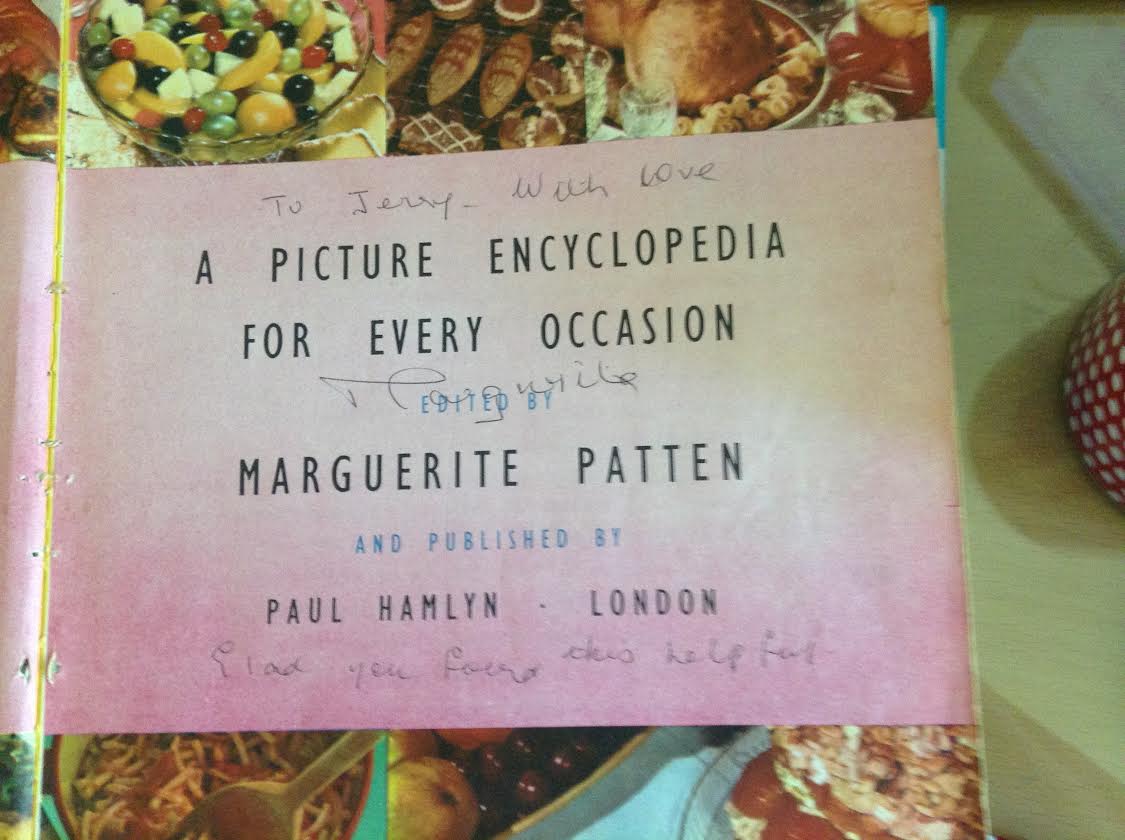
In 2010 I went to her house in Brighton and she signed the battered copy and wrote ‘To Jenny with love – Glad you found this helpful’.
Indeed it was the start of something brilliant – over 40 years for me working with food.
 I would often meet her at food events and talk about food in the curriculum. She was horrified when Home Economics became Food Technology and was told that students were cutting up bits of paper to show what a pizza looked like, and lobbied ferociously to keep food teaching on the curriculum. How pleased she would be to know that Food Preparation and Nutrition is the title for teaching in 2016.
Marguerite helped me with many of my school textbooks and sorted out food facts for my research – here are some things we talked about
- Who decided that you should move the spoon in a figure of eight when you mixed flour into a sponge cake mixture? Was it her?
- When did she start using metric measures? I was teaching them in 1970 in London schools – on a recent Radio 4 interview she used both and she was 93 at the time of the interview!
- What did she think about food technology? Marguerite got rather rattled – every child should learn how to cook family meals!
- What did she think of Jamie Oliver – A nice young man, my favourite among these new cooks!
- Was she a chef? Absolutely not! I am a home economist – I teach people to cook sensibly in the home!
I will miss her Christmas cards and enthusiasm and support. Thankyou Marguerite for your terrific energy in supporting Food teaching and helping me during my career.
I was hoping that she would write a forward to a book I have been planning for years, I taught them to cook – but I am too late. There were so many more questions I wanted to ask her.

 The Nutrition Program Blog