
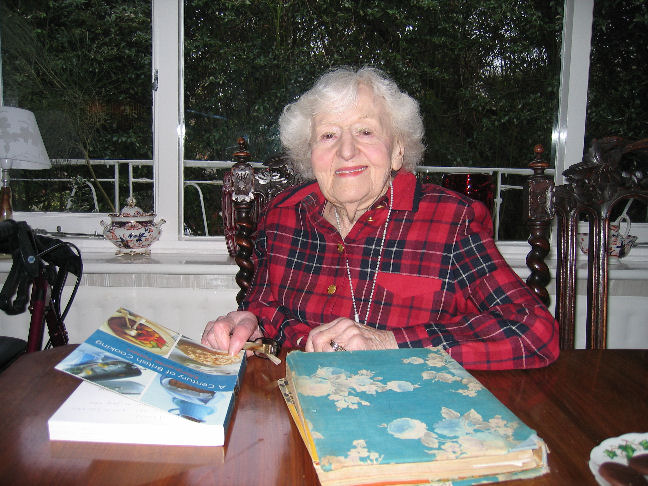
Marguerite Patten signing books
Marguerite Patten’s Cookery in Colour was my first cookery book and I used it for all my cooking exams in the 1960’s. Yesterday I visited her at her home and got it signed. Marguerite is as busy as ever, and at 93 years old, she regularly contributes to BBC discussion programs on current food issues. We talked about the challenges of cooking in war time, and all the changes in equipment and ingredients that came during the following years.
Marguerite gave me a copy of A Century of British Cooking, since I want to write a memoir of teaching in London schools in the 1970s and 80s. She has written an astonishing 170 books, which makes my 60 titles seem like a starter. Marguerite worked on the launch of the new pressure cookers which saved fuel in the 1950s – interesting how many things are becoming topical today. She demonstrated the Kenwood Chef when it was invented, and promoted many of the food initiatives in the 50s and 60s – using more wholemeal flour, the soft margarines for cake making.
We talked of offal – Awful Offal my students called it- and remembered stuffed hearts, liver and bacon, and grilled kidneys. Marguerite is involved with many of today’s food initiatives, and believes that food should be well cooked and delicious. We sat down to a tea of smoked salmon sandwiches and asparagus rolled in brown bread with cream cheese, followed by homemade fruit cake.
Marguerite is an inspiration to anyone wanting to learn to cook, or write about food. So optimistic, generous and hard working, with a database of stories and memories. Long may she continue to share her memories and sensible opinions on the food we eat. And I hope soon to take her to Bills in Lewes to see the wonderful displays of fresh, local, seasonal ingredients that she is so passionate about. Jenny Ridgwell

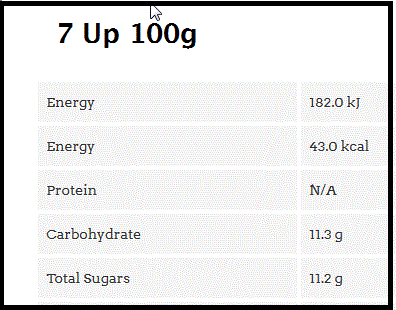 So 7 Up contains 11.2g total sugars per 100g and a can
 The Nutrition Program Blog